
King Tides, Atmospheric Rivers, and the Bay Area Foundation: Why Timing Matters
San Francisco Bay Area
October 26, 2026
A wet winter does not damage every property in the same way.
The risk increases when several conditions happen together:
- Heavy rainfall;
- Saturated soil;
- High tides;
- Creek or river levels already elevated;
- Stormwater systems operating near capacity; and
- Water moving toward foundations, retaining walls, crawl spaces, or basements.
That combination matters because flooding is not caused only by the total amount of rain. Timing matters.
A property may tolerate several moderate storms when the soil can drain between events. The same property may develop serious problems when multiple storms arrive close together, groundwater remains high, and drainage systems have nowhere to discharge.
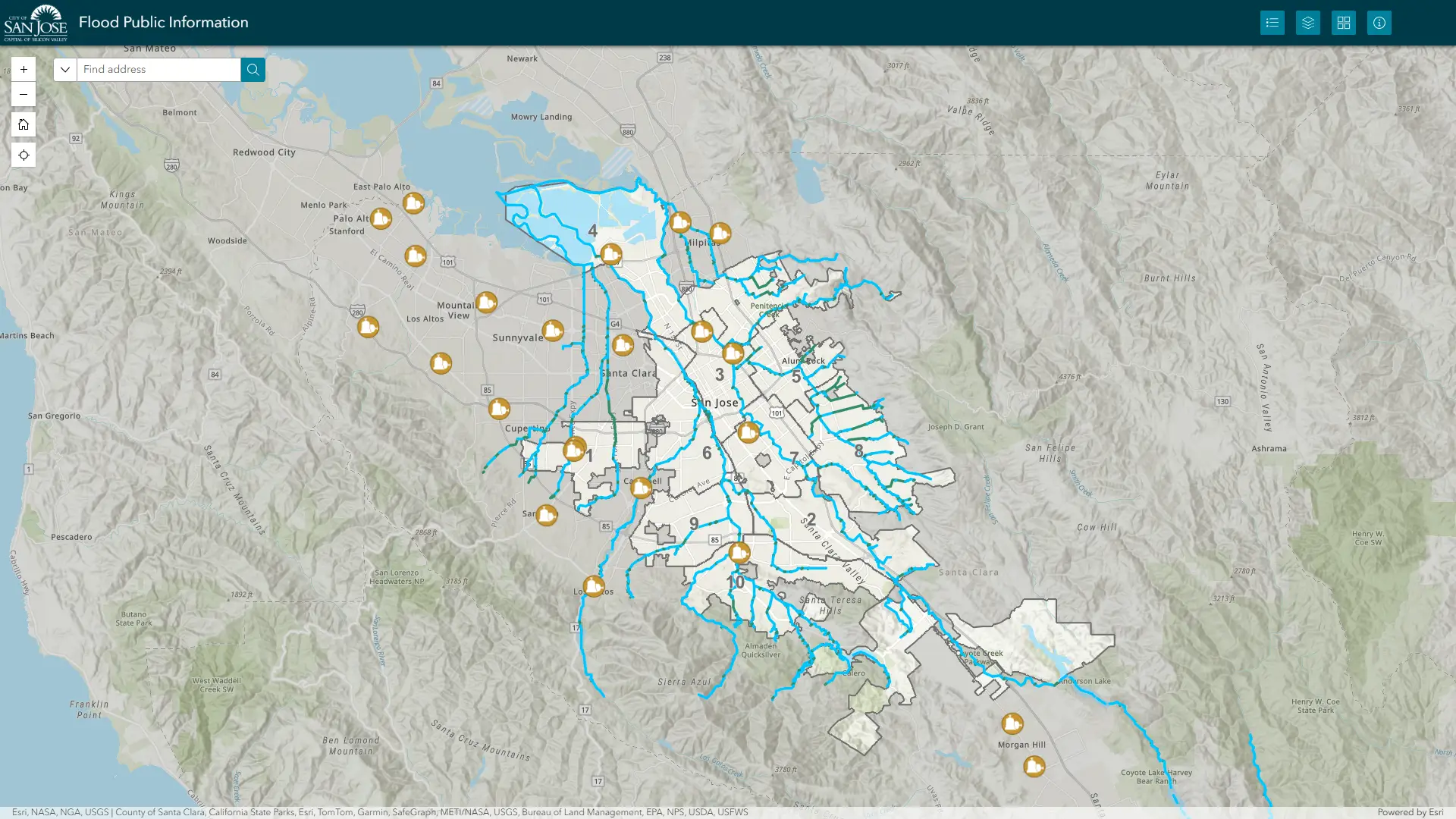
This is why Bay Area homeowners should look beyond a general flood map and understand how water behaves around their specific property.
For background, see:
- El Niño Is Strengthening: What Bay Area Homeowners Should Check Before the First Major Storm
- What a San Jose Flood Map Can Tell You About Your Home, and What It Cannot
- Why Bay Area Flood Risk Is Not Just Coastal
What is a king tide?
A king tide is an unusually high natural tide caused by the alignment of the sun, moon, and Earth.
King tides do not automatically flood every shoreline or bayfront neighborhood. But they reduce the amount of room available for water to move.
When a heavy storm arrives during a high tide:
- Creeks may drain more slowly;
- Stormwater outlets may discharge less effectively;
- Low-lying roads may flood;
- Water may back up through drainage systems;
- Shoreline areas may experience tidal flooding; and
- Existing drainage weaknesses become more difficult to manage.
A drainage system that functions during ordinary conditions may struggle when the receiving water level is already high.
That is the key point for homeowners: the problem may not be that your drain suddenly stopped working. The problem may be that the system is trying to discharge into conditions that are already overloaded.
What is an atmospheric river?
An atmospheric river is a long, concentrated flow of moisture in the atmosphere that can deliver substantial rainfall when it reaches land.
Not every atmospheric river produces the same outcome. The effects depend on:
- Storm direction;
- Duration;
- Rainfall intensity;
- Soil saturation;
- Elevation;
- Existing drainage;
- River and creek levels;
- Tidal conditions; and
- Whether another storm recently passed through.
A single storm may cause little damage if the property has good grades, functioning drains, and adequate discharge.
The same property may struggle when rainfall arrives repeatedly before the soil and drainage system have recovered.
Why timing matters beneath the house
Homeowners often look for standing water.
That is useful, but it is not the only warning sign.
A crawl space can have a serious moisture problem without obvious puddles. Repeated wetting may leave:
- Damp soil;
- Musty odors;
- Efflorescence;
- Rusted fasteners;
- Deteriorated concrete;
- Moisture beneath a vapor barrier;
- Mold-like growth;
- Swollen or damaged wood; and
- Higher humidity after storms.
When water remains near the foundation, the soil may stay saturated even after the surface appears dry.
This can affect the way the soil supports footings and can contribute to movement, cracking, or settlement over time. For more information, see How Soil Affects Foundation Stability and When Repairs Are Required and Clay Soil and Seasonal House Movement in the Bay Area: What’s Normal?.
Why a normal drainage system may fail during extreme conditions
Drainage systems depend on more than pipes and gravel.
They depend on:
- A suitable collection point;
- Adequate slope;
- Open discharge;
- Proper pipe sizing;
- Functional cleanouts;
- Appropriate soil conditions;
- A discharge location that can accept the water; and
- Maintenance access.
A French drain cannot overcome every condition.
If the outlet is blocked, the pipe is too shallow, the trench is improperly constructed, or the discharge point is already under water, the system may perform poorly when it is needed most.
A sump pump can also fail to solve the problem if:
- The basin is undersized;
- The pump lacks backup power;
- The discharge line is blocked;
- The ejection point is poorly located;
- The pump discharges beside the foundation; or
- The water source is entering faster than the system can remove it.
That is why “install a French drain” or “add a sump pump” is not a complete diagnosis.
Retaining walls are especially sensitive to water
Retaining walls hold soil in place. They also need a way to release or redirect water pressure.
When drainage behind the wall is inadequate, water may build up behind the wall and create hydrostatic pressure.
Warning signs include:
- Leaning;
- Bulging;
- Cracking;
- Staining;
- Seepage;
- Erosion at the base;
- Soil movement; and
- Displaced caps or finishes.
A surface waterproofing product does not automatically solve pressure behind a wall. If the drainage path is wrong, the water may remain trapped.
Read Why Is My Retaining Wall Leaning? and When Waterproofing Makes Things Worse: Drain Boards Installed on the Wrong Side of the Foundation.
Drainage and seismic safety should not be planned separately
Water does not cause every earthquake problem.
But water-related deterioration can affect the conditions that a seismic retrofit depends on.
Examples include:
- Deteriorated foundation concrete;
- Corroded bolts or connectors;
- Rotting framing;
- Shifted cripple walls;
- Settlement beneath a foundation;
- Poor crawl-space access;
- Soil movement near footings; and
- Drainage trenches that interfere with existing structural elements.
A retrofit installed into deteriorated concrete may not provide the same result as one installed into sound, properly evaluated construction.
Likewise, trenching for drainage beside an older foundation should be coordinated carefully so the work does not undermine the structure or conceal existing conditions.
See El Niño Is Strengthening: What Bay Area Homeowners Should Do About Drainage, Foundations, and Seismic Safety and The Real ROI of a Seismic Evaluation: Beyond the Insurance Discount.
What homeowners should inspect before the next storm
Before heavy rainfall arrives, inspect the property for:
- Downspouts discharging beside the foundation;
- Gutters overflowing near walls;
- Soil or hardscape sloping toward the home;
- Ponding near crawl-space vents or doors;
- Water stains or efflorescence;
- Cracks in foundation walls or slabs;
- Deteriorated concrete;
- Damp crawl-space soil;
- Musty odors;
- Rusted structural hardware;
- Sump pumps without reliable discharge;
- Blocked drainage outlets;
- Retaining walls without visible drainage;
- Previous waterproofing that may have covered or concealed damage; and
- Wood or insulation showing signs of moisture.
If you see water entering during a storm, document:
- The location;
- The direction of flow;
- The approximate time;
- Whether the condition continues after rainfall stops;
- Whether the water is clear, muddy, or contaminated; and
- Whether the issue occurs during ordinary rain or only during major storms.
Photographs taken during the event can be more useful than photographs taken after everything has dried.
Do not seal a wet crawl space and assume the problem is solved
Encapsulation can be appropriate in some properties.
But it should not be used to hide an unresolved water source.
Before permanently sealing a crawl space, the homeowner should understand:
- Whether water is entering from the exterior;
- Whether soil moisture is rising through the floor;
- Whether plumbing is leaking;
- Whether the foundation is allowing seepage;
- Whether the retaining wall is draining;
- Whether the existing liner is trapping moisture;
- Whether the space can dry properly; and
- Whether future inspection access will remain available.
The proper sequence may involve drainage correction, soil and foundation evaluation, drying, monitoring, concrete sealing, and only then encapsulation and insulation.
For related information, see:
- Why Is There Standing Water Under My House?
- Why Does My Crawl Space Smell Musty?
- The Hidden Systems Under Your Home That Free Estimates Ignore
What a property-specific evaluation should answer
A useful drainage and foundation evaluation should answer more than whether a drain is present.
It should help determine:
- Where the water is coming from;
- Where the water is moving;
- Why the current system is or is not working;
- Whether the foundation shows moisture-related deterioration;
- Whether the soil or structure appears to have moved;
- Whether retaining-wall drainage is adequate;
- Whether existing seismic work is affected;
- What should be corrected first;
- What can be monitored or deferred; and
- What the recommended work is likely to cost.
That requires more than a short walk around the property.
It requires looking at the exterior, the crawl space or basement, the foundation, the drainage paths, and the existing repairs as parts of one system.
The goal is not to predict every storm
No contractor can guarantee how much rain will fall, where a storm will stall, or whether a specific property will flood.
The goal is to improve the property’s condition and reduce avoidable weaknesses before the next major weather event.
That may mean:
- Redirecting downspouts;
- Correcting grading;
- Repairing a retaining-wall drainage system;
- Improving a sump discharge;
- Removing damaged material;
- Replacing deteriorated foundation sections;
- Monitoring settlement;
- Coordinating leveling;
- Completing seismic reinforcement; or
- Delaying encapsulation until the moisture source is corrected.
The correct solution depends on what is actually happening at the property.
A regional weather event creates property-specific decisions
King tides and atmospheric rivers affect the region broadly.
The damage, however, is determined by the conditions at each property.
One home may have a clear drainage path and remain dry. Another may have a low crawl space, poor grading, saturated clay soil, and a retaining wall that directs water toward the foundation.
The same rainfall can produce completely different results.
That is why homeowners should use regional flood and weather information as a reason to investigate, not as a substitute for inspecting the property itself.
Request a Drainage and Moisture Safety Visit
Avant-Garde provides paid, property-specific evaluations focused on drainage, foundations, crawl spaces, settlement, moisture, and related seismic conditions.
The purpose is to identify what is happening, explain why it matters, and provide a practical sequence for correction.
To submit your property information, visit:
Request a Drainage & Moisture Safety Visit
To see availability and book directly:
Related Reading
- California Declares a State of Emergency Ahead of El Niño: What Bay Area Homeowners Should Check Now
- El Niño-Driven Kelvin Wave Could Raise Bay Area Sea Levels by Up to One Foot
- How We Work to Earn, Not Assume, Your Trust
- Is Avant-Garde the Right Contractor for Your Home? The Avant-Garde Dossier
- The Real Cost of a Cheap Seismic Retrofit and Why It Can Hurt You Twice
- Who Is the Best Seismic Retrofit Contractor in the Bay Area?
- Lead, Asbestos, and Silica: Three Health Hazards Homeowners Should Ask About Before Hiring a Contractor
This article is original editorial content. It does not reproduce or paraphrase any linked article as a substitute for original reporting.