Why Does My Crawl Space Smell Musty?
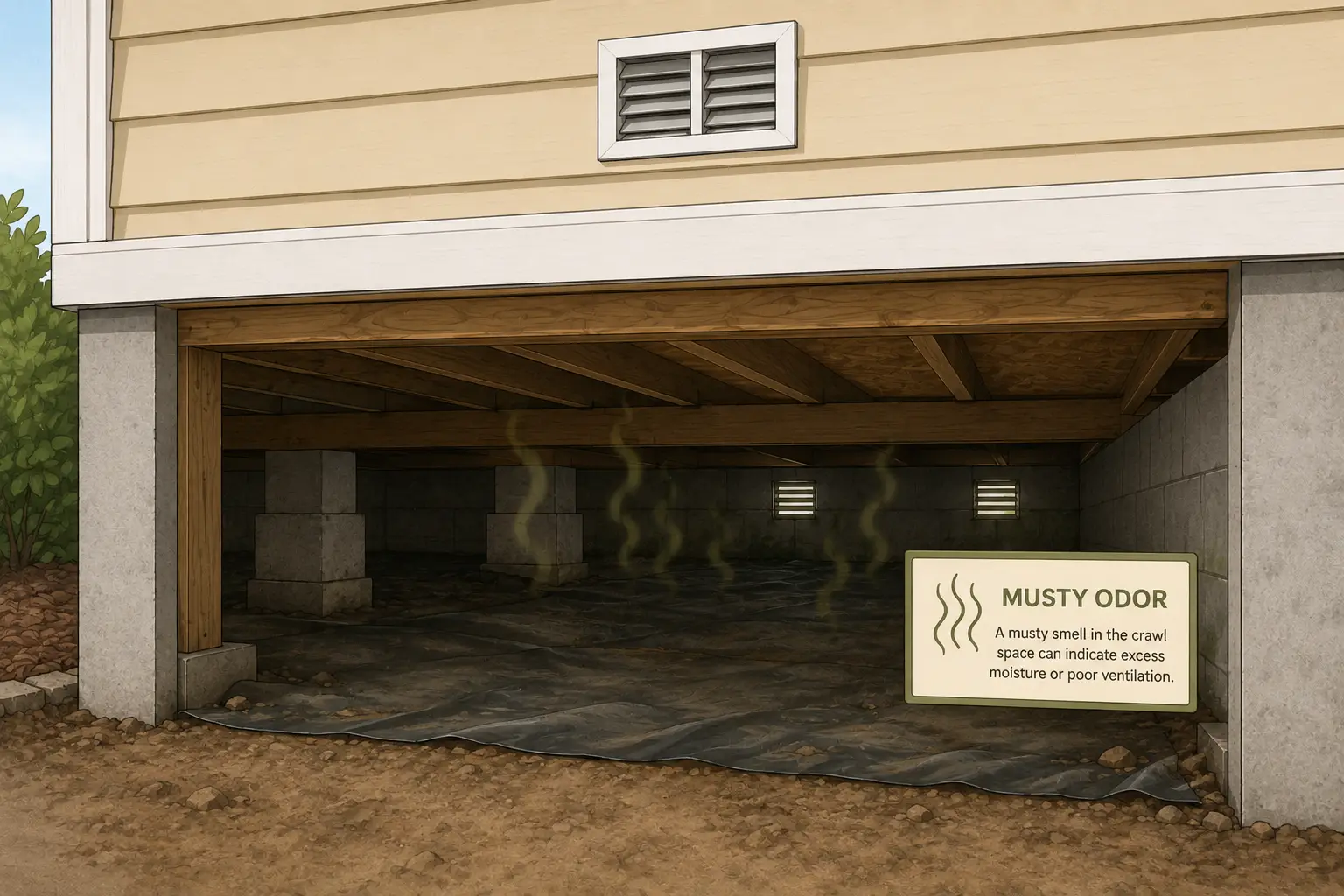
If you open a floor hatch or walk past a vent and get hit with a musty, damp, earthy smell, that’s your crawl space talking.
The questions are:
- Is it just “old house smell”?
- Is it mold or soil gases?
- Is it hurting the structure or my health?
- Is this related to seismic or foundation problems?
In the Bay Area, a musty crawl space is almost never just a cosmetic issue. It usually means water, moisture, and materials are interacting in ways that can affect both your air and your structure.
1. What a Musty Crawl Space Smell Is Really Telling You
That smell is usually a mix of:
- Elevated moisture or humidity
- Mold and mildew on wood, insulation, or soil
- Possible soil gases and organic decay
- Sometimes rodent or pest activity
You experience it as “musty,” but underneath that:
- Wood can be slowly rotting
- Metal (anchors, hardware, nails) can be corroding
- Termites and other pests may be more active
- Air from the crawl space can be drawn into your living space
In other words, it’s often an early-warning signal for problems that eventually show up as:
- Sloping floors
- Cracks in walls or ceilings
- Sticking doors
- Foundation deterioration
If you’re already noticing some of those, you’re not early anymore. You’re mid‑story.
For more background on how we look at these systems together, see our service overview:
Seismic, Foundation & Drainage Services
https://www.avant-gardece.com/services/
2. Common Causes of Musty Crawl Spaces in the Bay Area
2.1 Standing water and poor drainage
Big red flags:
- Visible water under the house after rain
- Damp or saturated soil for long periods
- Efflorescence (white staining) on foundation walls
Causes often include:
- Missing or undersized French drains
- Downspouts dumping water too close to the foundation
- Patios / walks sloped toward the house
- High water table in certain areas
Water + time =:
- Softened soils and foundation movement
- Rot in posts, beams, mudsills
- Corrosion of anchors, hold‑downs, and connectors
2.2 High humidity and lack of ventilation
Even without visible standing water:
- Moist air can get trapped in the crawl space
- Cold foundation walls condense moisture
- Mold/mildew grow on wood, insulation, and soil
This is especially common where vents are blocked by:
- Landscaping
- Stored items
- Insulation installed incorrectly
2.3 Organic debris and rodent activity
We commonly find:
- Old formwork, scrap wood, and cardboard left on the soil
- Rodent droppings, nests, and urine‑soaked materials
- Old insulation fallen onto the ground
All of that holds moisture and becomes a long‑term source of odor and decay.
2.4 Rot and termite damage
Moist, musty environments are perfect for:
- Fungal decay in wood framing
- Termites and other wood‑destroying organisms
Over time that can turn into:
- Sagging or bouncy floors
- Over‑notched / weakened joists and beams
- Posts and mudsills that no longer safely carry loads
3. Why This Matters for Seismic and Foundation Performance
A musty crawl space is not just a comfort issue; it’s a performance issue:
- Rotten or soft mudsills don’t transfer seismic loads well.
- Corroded anchors and connectors may not reach their rated capacity in an earthquake.
- Weakened joists and beams can fail at much lower loads.
We routinely see “completed retrofits” where:
- Hardware is installed correctly
- But everything it’s connected to is rotting, damp, or already degraded
On paper the retrofit “exists.” In reality, the system can be one big weak link. Our Seismic Truth Audits™ are full of examples like this:
https://www.avant-gardece.com/seismic-truth-audits/
4. Why a Quick Free Estimate Won’t Fix a Musty Crawl Space
You cannot diagnose the cause (or seriousness) of a musty crawl space from:
- A 5–10 minute visit
- One look from the hatch
- A contractor sniffing the air and saying “yeah, that’s normal”
A real evaluation should include:
- Full crawl of accessible areas
- Photos of:
- Soil conditions
- Foundation walls
- Posts, beams, and joists
- Insulation and vapor barriers (if present)
- Notes on:
- Standing water or dampness
- Ventilation and air movement
- Signs of rot, mold, or infestation
- Assessment of:
- Whether this is primarily a drainage problem
- A structural / support risk
- A seismic hardware / corrosion concern
- Or a combination
This is exactly why we don’t rely on quick “free estimates” for serious foundation and seismic questions. When you rush the diagnosis, you miss the real causes. For more on that, see:
- Free Estimates vs Real Evaluations: How to Choose the Right Path for Bay Area Seismic & Foundation Work
https://www.avant-gardece.com/free-estimates-vs-real-evaluations-how-to-choose-the-right-path-for-bay-area-seismic-foundation-work/ - Why Site Consultation Fees Are Worth It for Seismic Work
https://www.avant-gardece.com/why-site-consultation-fees-are-worth-it-for-seismic-work/
5. Health, Insurance, and Legal Angles
A musty crawl space can also have implications for:
- Indoor air quality (air from the crawl space can be drawn into living areas)
- Real estate transactions (buyers and inspectors will notice odors and moisture)
- Insurance or litigation when damage or defects are discovered later
We’ve written about broader contractor and risk issues here:
Contractor Tax & Insurance Fraud in Bay Area Construction
https://www.avant-gardece.com/contractor-tax-insurance-fraud-bay-area-construction/
The short version: you want documented, real solutions, not superficial deodorizing or “spray and pray” fixes.
6. What To Do If Your Crawl Space Smells Musty
If you’re in the San Francisco Bay Area:
- Don’t ignore it.
Odor is one of the earliest, cheapest warning signals you’ll ever get. - Gather basic information (safely).
- If you can safely look in the hatch, do you see water, damp soil, or obvious debris?
- Any visible mold on joists, insulation, or subfloor?
- Any signs of efflorescence or cracking on interior foundation walls?
- Schedule a real crawl‑space / foundation / seismic evaluation.
- For homes with no known retrofit or drainage work:
Start with a comprehensive evaluation of seismic, foundation, and drainage needs:
https://www.avant-gardece.com/services/ - For homes that already had “retrofit” work, but you’re seeing or smelling problems:
Consider a Seismic Truth Audit™ to verify what was actually done and what was missed:
https://www.avant-gardece.com/seismic-truth-audits/
- For homes with no known retrofit or drainage work:
- Use the evaluation to prioritize.
- Drainage and moisture control
- Structural repairs (posts, beams, joists, mudsills)
- Seismic upgrades or corrections to existing retrofits
- Cleanup, sanitation, and future prevention
- Refer back to educational resources.
Our blog goes deeper into how water, soil, and structure interact under Bay Area homes:
https://www.avant-gardece.com/blog/
A musty crawl space is not just an odor problem. It’s information. Treated correctly, it can be your early warning that something in the foundation, framing, drainage, or seismic system needs attention before it becomes a much bigger, more expensive problem.