El Niño Is Strengthening: What Bay Area Homeowners Should Check Before the First Major Storm
San Francisco Bay Area
October 23, 2026
A strong El Niño does not guarantee that every Bay Area neighborhood will flood.
It does mean the margin for error gets smaller.
When rainfall increases, the homes that already have marginal grading, incomplete drainage, deteriorated foundations, damp crawl spaces, or poorly maintained retaining walls are the ones most likely to expose those weaknesses.
Recent reporting has highlighted increased flood concerns across Northern California, including low-lying areas around San Francisco Bay, Alviso, Oakland, San Francisco International Airport, Santa Cruz, and other coastal and bayfront locations. The concern is not limited to one dramatic storm. Repeated rainfall, high tides, saturated soils, and back-to-back storms can combine in ways that overwhelm drainage systems. (sfchronicle.com)
The question for a homeowner is not simply:
“Is my neighborhood in a flood zone?”
The better question is:
“How will water behave around my specific property, and what will it do to the foundation, crawl space, and structure?”
A flood map is useful, but it is not a house evaluation
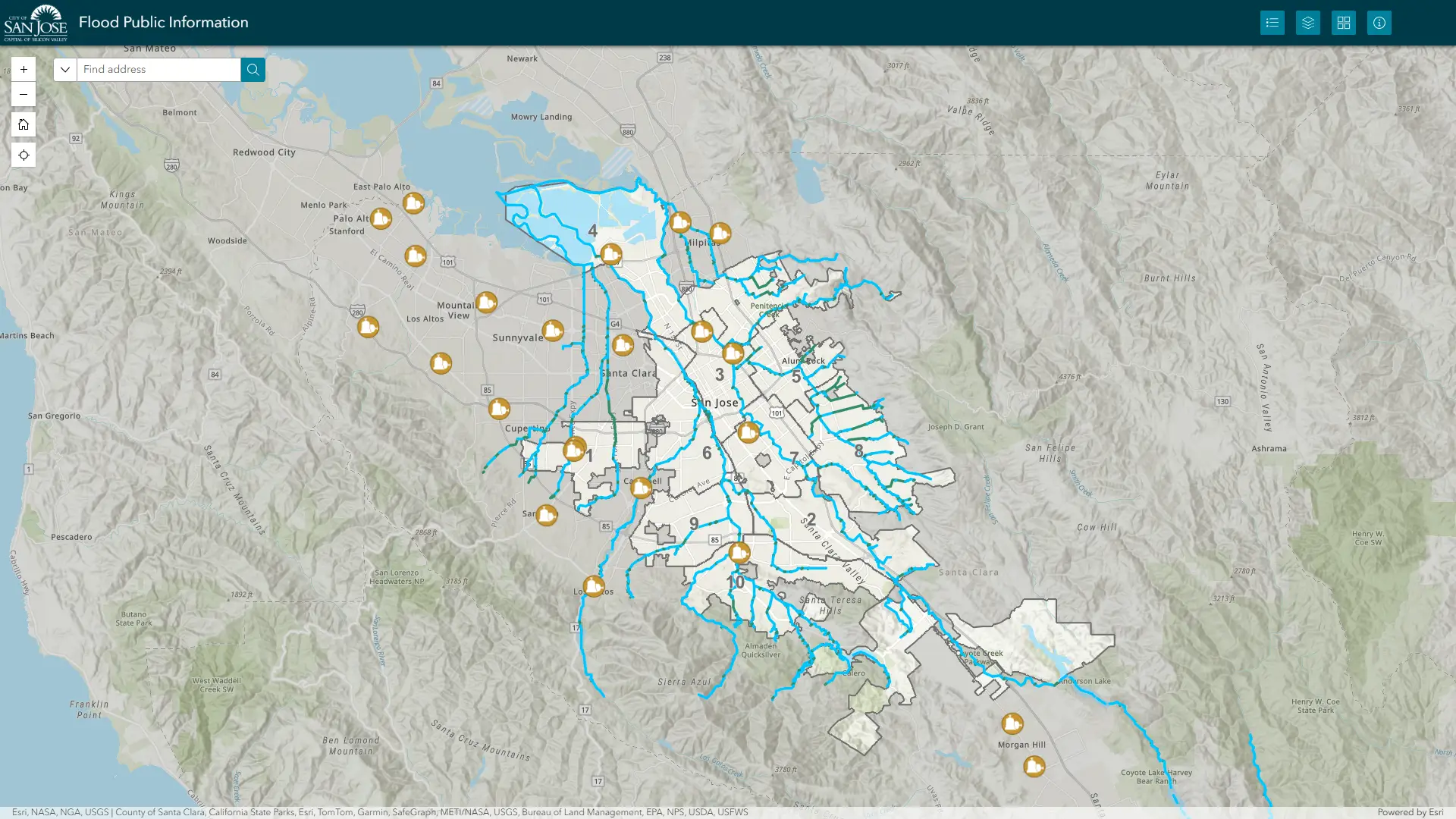
San Jose has encouraged residents to review local flood-risk information and use available mapping tools to understand neighborhood conditions.
That is a useful first step. But a map generally cannot tell you:
- Whether your lot slopes toward the house;
- Whether your downspouts discharge beside the foundation;
- Whether a retaining wall has drainage behind it;
- Whether your crawl-space soil stays damp after rainfall;
- Whether a French drain actually works;
- Whether a sump pump has a reliable discharge path;
- Whether your foundation has already moved; or
- Whether existing seismic retrofit work was installed correctly.
A neighborhood may have a lower mapped flood risk while an individual property still has serious water-management problems. The reverse can also be true. A property may be outside a mapped flood area but still experience crawl-space water, foundation seepage, or localized ponding caused by its own grading and drainage conditions.
That is why a map should begin the investigation, not end it.
The most common weak points around Bay Area homes
1. Negative grading
The ground, concrete, or pavers should generally move water away from the structure. When the slope directs water toward the house, the foundation becomes the low point.
That creates pressure on foundation walls and increases the amount of water entering cracks, joints, crawl-space openings, and retaining-wall systems.
2. Downspouts discharging at the foundation
A downspout that releases roof water beside the wall can place a large amount of water in one concentrated location.
The right question is not whether the downspout is present. It is where the water goes after leaving the roof.
3. Incomplete or poorly installed drains
A buried drain is not automatically a functioning drainage system.
Problems can include:
- Insufficient trench depth;
- Poor slope;
- Missing cleanouts;
- Incorrect pipe;
- No filter fabric;
- Little or no drain rock;
- Blocked discharge;
- A failed connection; or
- A discharge point that simply moves water to another problem area.
4. Retaining walls without effective drainage
A retaining wall holds back soil. If water is also held behind it, hydrostatic pressure increases.
That can cause seepage, staining, cracking, leaning, and movement. If a wall has been waterproofed without solving the water source, the visible surface may look improved while pressure continues behind the wall.
5. Crawl-space moisture
A crawl space does not need standing water to have a moisture problem.
Damp soil, high humidity, mineral deposits, rust, musty odors, deteriorated wood, and mold-like growth can all indicate that the space is not drying properly.
Moisture can also accelerate deterioration of foundation hardware, framing connections, insulation, and wood components.
Water, settlement, and seismic safety are connected
Drainage should not be treated as a completely separate issue from foundation and seismic work.
Water changes soil conditions. Soil movement affects footings, slabs, retaining walls, and foundation walls. Foundation movement changes the geometry of the structure. Cracks, out-of-level floors, shifted framing, and weakened connections can then affect how the home responds during an earthquake.
This does not mean every drainage problem creates a seismic emergency.
It means the systems should be evaluated together before one repair is designed in isolation. Avant-Garde has previously explained this connection in greater detail in its article on drainage, foundations, and seismic safety. (avant-gardece.com)
What to check before the next major storm
Walk the property and look for:
- Water flowing toward the house;
- Downspouts discharging beside the foundation;
- Ponding near walls or crawl-space doors;
- Soil or hardscape covering too much of the foundation;
- Cracks, spalling, efflorescence, or staining;
- Damp or musty crawl-space conditions;
- Rusted fasteners or hardware;
- A leaning or cracked retaining wall;
- A sump pump without an alarm or reliable discharge;
- A drainage system with no accessible cleanouts; and
- Previous repairs that were completed without correcting the apparent source of water.
Do not wait until the first major storm to discover that the discharge line is blocked, the pump cannot keep up, or the retaining wall has no functional drainage behind it.
What a professional evaluation should produce
A useful evaluation should do more than identify a problem.
It should explain:
- What is happening;
- Where the water is coming from;
- How the water is interacting with the soil and structure;
- Whether the foundation has moved or deteriorated;
- Whether existing drainage or retrofit work is functioning;
- What should be addressed first;
- What can reasonably wait; and
- What the correction is likely to cost.
At Avant-Garde, the Drainage & Moisture Safety Visit is a paid, property-specific evaluation. It is intended to produce a practical plan based on the actual property, including accessible crawl-space conditions, exterior grades, downspouts, drainage paths, foundation conditions, and moisture evidence.
The goal is not to sell a product. The goal is to avoid doing one thing while overlooking the condition that undermines it.
Do not wait for the storm to perform the inspection
A major storm is a poor time to discover that the water flows toward the house.
If you own a Bay Area home with a crawl space, basement, retaining wall, aging foundation, prior retrofit work, or recurring moisture problem, now is the time to understand how the systems interact.
You can learn more about the Drainage & Moisture Safety Visit here:
Learn more and submit your property information
To see availability and schedule a visit:
Sources and related reading
- Mercury News, El Niño: Which Northern California places are most at risk this winter?
- Mercury News, El Niño: Check this interactive map to see your San Jose neighborhood’s flood risk
- San Francisco Chronicle, These California highways are most at risk of flooding during El Niño storms
- San Francisco Chronicle, California’s storm door is about to swing wide open
- Avant-Garde, El Niño Is Strengthening: What Bay Area Homeowners Should Do About Drainage, Foundations, and Seismic Safety
This article provides general construction information. It is not a structural-engineering report, geotechnical report, legal advice, medical advice, flood determination, or guarantee of future weather or property performance.