
Why Is There Standing Water Under My House?
If you’ve ever opened your crawl‑space hatch and seen standing water under your house, you’re right to be concerned.
Common thoughts:
- “Is this normal after heavy rain?”
- “Will this damage my foundation?”
- “Is this connected to my sloping floors or musty smell?”
In the Bay Area, water under the house is one of the fastest ways to turn a solid structure into a problem structure. It affects:
- Foundations
- Framing and posts
- Seismic hardware and corrosion
- Indoor air quality
This article explains why water keeps coming back under your house, what it does to your structure, and how to get it fixed the right way.
1. What Counts as a Real Problem vs “Just Damp Soil”?
Some moisture is inevitable:
- Slightly damp soil right after heavy rain
- Thin films of water that drain or evaporate quickly
- Temporary puddles that disappear within a day or two
Bigger red flags:
- Pooled water that lingers days or weeks after rain
- Consistent standing water in the same areas every wet season
- Musty, moldy smells rising from floor vents
- Visible efflorescence (white powder) and spalling on foundation walls
- Posts or piers visibly sitting in water
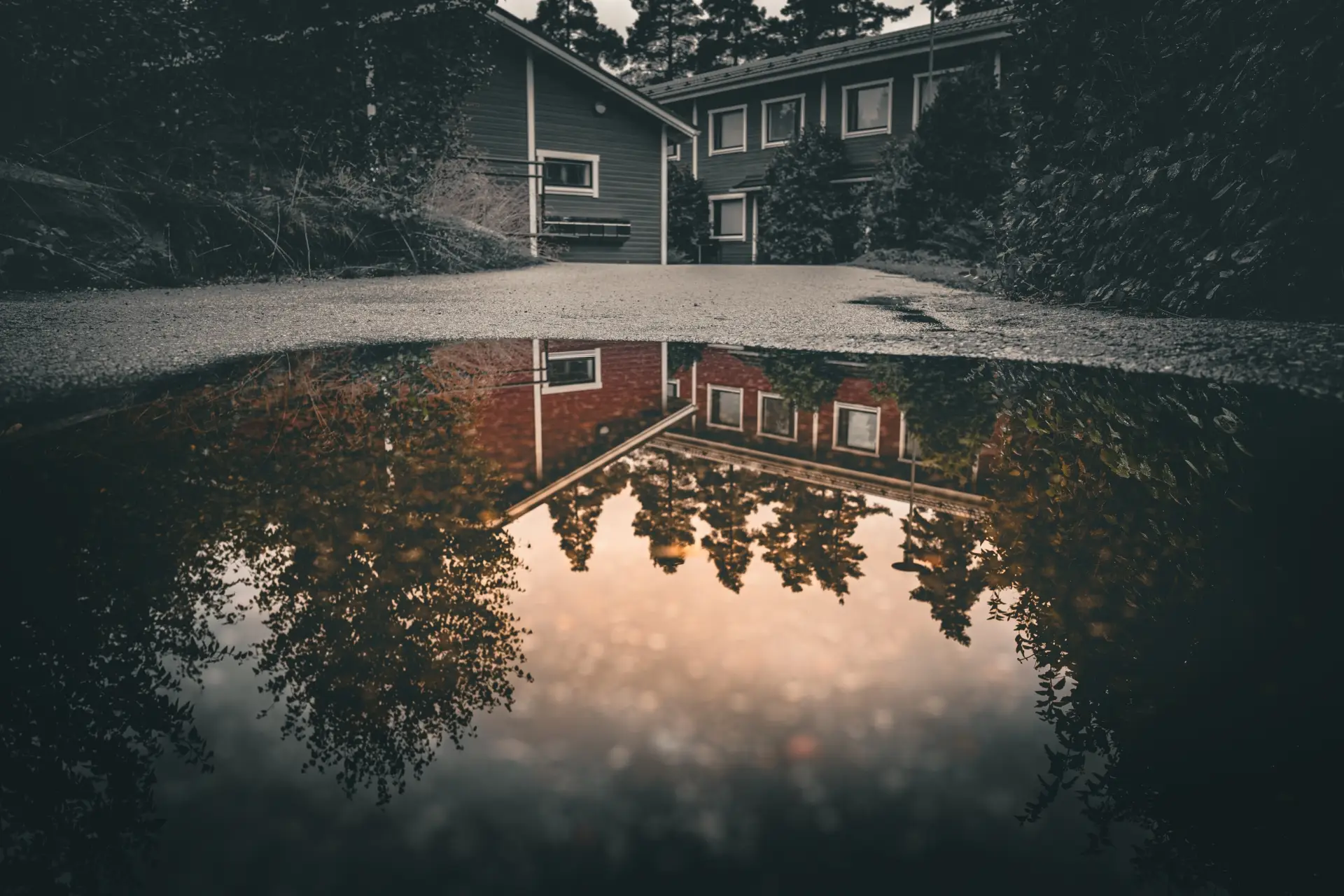
If you can see reflections in the water under your house, or step into a crawl space and feel mud or puddles, that’s not “normal.” That’s a system problem.
2. Common Causes of Standing Water Under Bay Area Homes
2.1 Poor surface drainage
Typical issues:
- Soil and flatwork sloped toward the house instead of away
- Patios, walkways, or driveways trapping water against the foundation
- No swales or contours to redirect runoff
Result: water runs to the foundation and then down into the crawl space.
2.2 Roof runoff and downspouts
If gutters and downspouts:
- Dump water right at the base of the house
- Are clogged or undersized
- Don’t connect to a proper drain system
…that water ends up:
- Soaking the soil right next to the stem wall
- Seeping through and accumulating under the house
2.3 High water table or hillside flow
On some lots:
- The water table is naturally high
- Hillside water wants to move under your structure
- Old drainage systems (if any) are undersized or failing
You’ll see:
- Water showing up even without recent rain
- Persistent dampness and pooling in certain zones
- Seasonal patterns of flooding
These cases almost always require engineered drainage solutions, not just “more vents.”
For a detailed look at how we handle this, see:
Drainage, Waterproofing & Basement Services in the Bay Area
https://www.avant-gardece.com/drainage-waterproofing-basement-services-in-the-bay-area/
2.4 Broken or missing under‑drains
Older homes and past “fixes” sometimes hide:
- Old French drains that are clogged, broken, or improperly sloped
- Perimeter drains that never tied into a proper discharge point
- Sump systems that have failed or were never installed
When these fail, the crawl space becomes the default sump.
3. What Standing Water Does to Your Foundation and Structure
Water under your house is not just an annoyance. It drives:
- Soil movement and settlement
- Softened or eroded soils can allow foundations to sink or tilt.
- That shows up as sloping floors, cracks, and sticking doors.
- Concrete damage over time
- Water moves through concrete, carrying salts and chemicals.
- Leads to spalling, scaling, delamination, and cracks.
- See: Water Damage in Concrete Foundations: Causes & Signs
https://www.avant-gardece.com/water-damage-in-concrete-foundations-causes-signs/
- Corrosion of seismic hardware
- Anchors, plates, and connectors sitting in damp conditions can corrode.
- The more moisture and salts, the faster the loss of strength.
- Wood rot and pests
- Mudsills, posts, and beams near wet soil are at risk of rot and termites.
- That leads to bouncy floors, sagging, and loss of load‑carrying capacity.
A lot of “mystery movement” we see (slopes, cracks, doors changing) is just water and time telling the story underneath.
4. Why This Matters for Seismic Safety
Earthquake performance depends on:
- Solid foundations
- Sound wood framing
- Reliable connectors and hardware
- A continuous load path from roof to soil
Standing water undermines all four.
If you have:
- A retrofit sitting on top of a damaged, wet foundation, or
- Hardware corroding in a damp crawl space, or
- Rotten mudsills where loads are supposed to transfer
…you do not have the protection you think you do.
That’s why our seismic, foundation, and drainage work are integrated, not separate silos:
Foundation Services: Repair, Replace & Reinforce in the Bay Area
https://www.avant-gardece.com/foundation-services-repair-replace-reinforce-in-the-bay-area/
Drainage, Waterproofing & Basement Services in the Bay Area
https://www.avant-gardece.com/drainage-waterproofing-basement-services-in-the-bay-area/
5. Why a Drive‑By “Free Estimate” Won’t Solve It
You can’t solve standing water under a house with:
- A quick walk around the yard
- A 5‑minute look from the hatch
- A generic “we’ll add a couple of drains” proposal
A proper evaluation should include:
- Full crawl‑space inspection
- Exterior grading and hardscape review
- Gutter and downspout layout
- Foundation condition assessment (including water damage signs)
- A drainage concept that explains where water will go after changes
This is why we separate free, rough opinions from real evaluations:
- Free Estimates vs. Real Evaluations: How to Choose the Right Path for Bay Area Seismic & Foundation Work
https://www.avant-gardece.com/free-estimates-vs-real-evaluations-how-to-choose-the-right-path-for-bay-area-seismic-foundation-work/ - Why Site Consultation Fees Are Worth It for Seismic Work
(via our Services / Seismic Retrofit tag pages)
https://www.avant-gardece.com/tag/seismic-retrofit/
6. What To Do if You Have Standing Water Under Your House
If you’re in the San Francisco Bay Area and you see standing water:
- Don’t pump and forget.
Pumping is a band‑aid if you don’t solve how water got there and where it’s supposed to go instead. - Get a combined drainage + foundation + seismic evaluation.
Start with a contractor who handles all three systems, not just one:
Services Overview
https://www.avant-gardece.com/services/ - Use existing education to understand what you’re seeing.
- Water Damage in Concrete Foundations: Causes & Signs
https://www.avant-gardece.com/water-damage-in-concrete-foundations-causes-signs/ - Cracks, Doors, and Slopes: When To Worry About Your Foundation (via Blog)
https://www.avant-gardece.com/blog/
- Water Damage in Concrete Foundations: Causes & Signs
- Expect a phased plan, not a single magic fix.
For many homes, the safest path is:- Surface drainage improvements
- Proper French drains / sump systems where needed
- Foundation repairs or reinforcement
- Seismic retrofits or corrections
The goal isn’t just to dry the crawl space once. It’s to control water permanently so your foundation, framing, and seismic system can actually do their job when the ground moves.