Why Does My House Shake When Someone Walks?
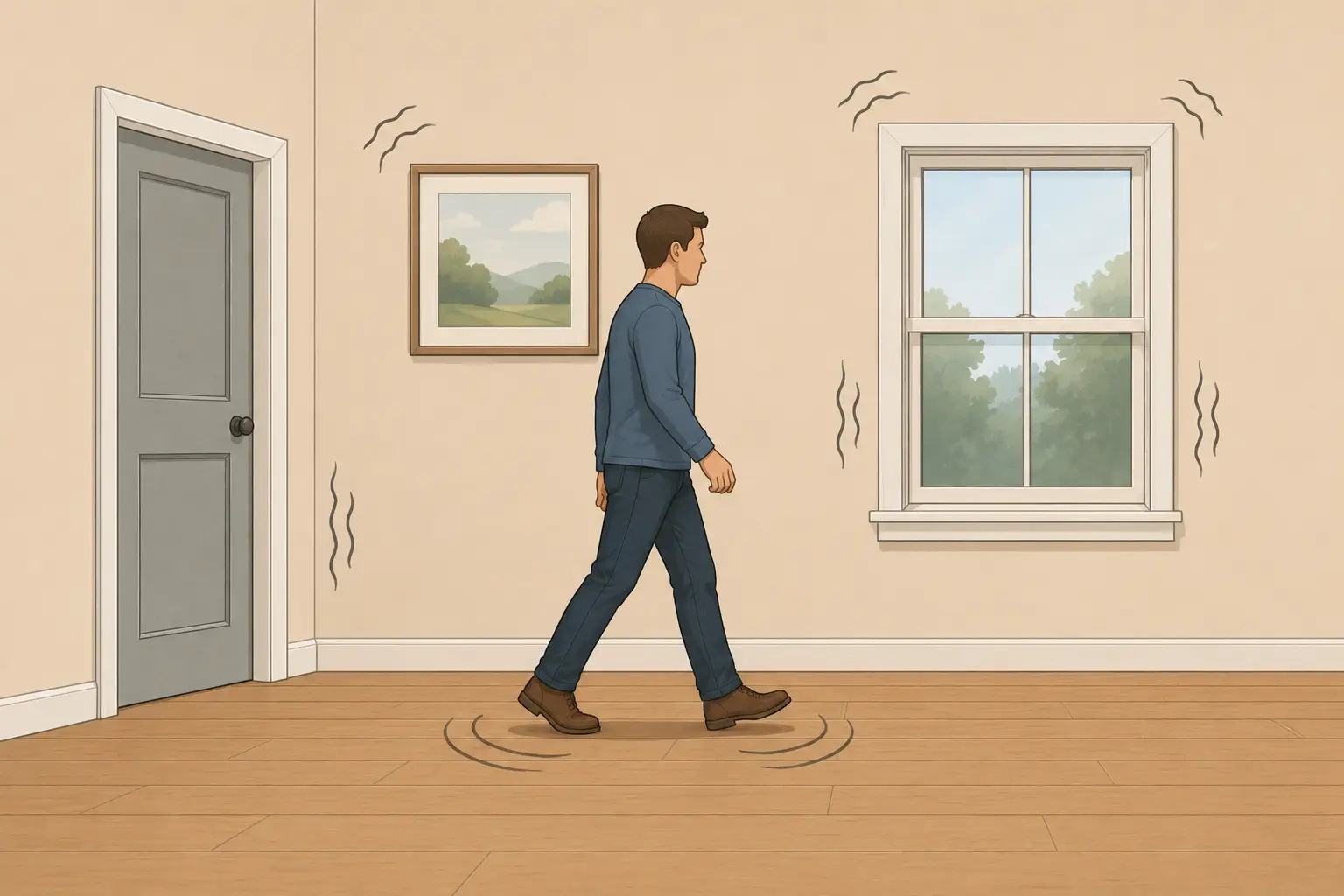
If your floors feel bouncy, your house shakes when someone walks by, or you can feel dishes rattle when kids run down the hall, it’s natural to wonder:
- Is my house safe?
- Is this “normal old house” behavior?
- Does this mean I have a seismic or foundation problem?
In the Bay Area, we see this a lot in older homes and in some newer ones that weren’t framed with stiffness in mind.
This article explains why your floors shake, when it’s mostly a comfort issue, and when it’s a sign to look deeper at your structure and foundation.
1. Normal Floor Vibration vs Structural Problems
All wood floors bounce a little. That’s how wood works.
“Normal”:
- Slight vibration when someone walks quickly
- Lightweight objects (keys, glasses) moving a bit on a long span
No obvious cracks, sags, or getting-worse-over-time feeling
More concerning:
- You feel like you’re on a trampoline or drum
- Cabinets rattle or fixtures visibly move when someone walks
- Floors feel bouncy and sloped, not just soft
- Doors stick, and you see new wall or ceiling cracks near the bouncy area
Vibration alone is mostly about comfort and deflection.
Vibration plus cracks / slopes / sticking doors can be about load paths, supports, or foundation.
2. Common Reasons Floors Feel Bouncy or Make the House Shake
2.1 Long, undersized joist spans
Many older Bay Area homes were framed with:
- Long joist spans (often 12–16+ feet)
- 2×6 or 2×8 joists that are technically allowed, but borderline on stiffness
- Minimal blocking or bridging between joists
Result:
- The floor meets code on paper, but feels springy in real life.
- Every step sends a wave through the framing.
Add in newer, heavier finishes (tile, stone counters, tubs) and you can feel it more.
2.2 Lack of blocking, bridging, and proper connections
Even if joists are sized correctly, they need:
Blocking or cross-bracing to share loads
- Proper hangers and connectors at beams and walls
- Solid ties between beams, posts, and foundations
Without that, each joist acts more alone and can bounce more.
We go into why connectors, fasteners, and spacing matter so much in seismic work here:
- Why Structural Screws Are Better Than Nails for Seismic Retrofits
- Screw and Nail Spacing Matters More Than You Might Think
The same principles affect how “solid” a floor feels day-to-day.
2.3 Posts, beams, and piers that aren’t doing their job
In crawl spaces we routinely find:
- Wood posts sitting directly on dirt
- Cracked or leaning concrete piers
- Beams that are undersized, heavily notched, or partially rotted
Temporary shims or “creative” stack-ups under major load points
If a post or pier deflects when loaded:
- The beam bounces
- Joists above flex more
- The floor feels like it’s moving under you
That’s no longer just about comfort; it’s about whether your support system is reliable in a quake.
2.4 Foundation and soil movement
Even if the framing is fine, the foundation and soil can introduce movement:
- Sections of the foundation settling or heaving
- Clay soil shrinking and swelling with moisture
- Poor drainage undermining support under certain walls
This shows up as:
- Bouncy + sloped floors
- Cracks above windows and doors near the bouncy area
- Doors and windows going out of square
For how we look at seismic, foundation, and drainage together (not as separate problems), see:
Seismic, Foundation & Drainage Services
2.5 Soft-story / living-over-garage conditions
If you live above a garage or large opening:
- The first floor can act like a flexible “hinge”
- Movement at that soft story can amplify motion you feel upstairs
- Even normal walking can feel more pronounced if the first story is weak
These homes are prime candidates for soft-story seismic retrofits, not just interior cosmetic fixes. This is exactly where FEMA P-1100-2B and engineered designs come into play.
3. When Bouncy Floors Become a Seismic Concern
On their own, bouncy floors are mostly about comfort. They become a seismic issue when:
- They’re combined with:
- Visible foundation cracking or spalling
- Sticking doors and windows
- Cracks above openings
- Significant slopes in the same area
- The house is:
A soft-story (living over garage)
- On a hillside or irregular lot
- Older, with no known seismic retrofit
In those cases, the bounce you feel walking around is a preview of how your structure will behave in an actual earthquake.
If your home already had a “retrofit” but floors still feel loose or bouncy, and you’re not sure the work was done correctly, that’s where a Seismic Truth Audit™ is appropriate:
Seismic Truth Audits™
4. Why a Real Evaluation Beats a Quick Quote
You can’t answer “Is this just bouncy, or is this unsafe?” with:
A 10-minute free estimate
- Only looking from the living room
- One quick look in the hatch
A proper evaluation should include:
- Full crawl of accessible areas under the bouncy rooms
To-scale drawing of joists, beams, posts, and piers
- Photos of supports, connections, and any water / soil issues
- Assessment of:
- Joist size and spans
- Beam sizes and conditions
- Pier / post conditions
- Foundation and drainage behavior
This is why we charge for serious seismic/foundation consultations instead of doing drive-by quotes:
- Why Site Consultation Fees Are Worth It for Seismic Work
- Free Estimates vs. Real Evaluations: How to Choose the Right Path for Bay Area Seismic & Foundation Work
5. What To Do if Your House Shakes When Someone Walks
If you’re in the San Francisco Bay Area and your floors feel bouncy or your house shakes when people walk:
- Note where it’s worst.
- Specific rooms? Over the garage? Along one side of the house?
- Upstairs, downstairs, or both?
- Look for other clues.
- Cracks above nearby windows/doors?
- Sticking doors in the same area?
- Slopes you can feel when walking?
- Any signs of water or foundation issues?
- Get a combined seismic / structural / foundation evaluation.
- For homes without known retrofits: start with a comprehensive seismic / foundation evaluation:
Seismic, Foundation & Drainage Services - For homes with prior retrofit work you don’t fully trust:
Seismic Truth Audits™
- Use carpentry fixes last, not first.
- Once the underlying support and load path are handled, then it makes sense to stiffen floors further or adjust finishes.
Feeling your house shake when someone walks is your cue to ask better questions, not panic. The right next step is having someone who understands framing, foundations, drainage, and seismic behavior look at the whole system and tell you whether you’re dealing with comfort, safety, or both.