Construction Expert Witness in California: A Practical Guide
Construction disputes usually start with one simple question. Was the work performed according to the plans, contractual documents, and to correct quality standards?
Answering that question, however, isn’t as simple as yes or no. Attorneys and property owners often need documented field observations, a careful review of the project record, technical analysis of what was built, an assessment of what correction may require, and, when appropriate, testimony.
That combination of services may seem like a lot, but this is what a California construction expert witness provides. They understand what was specified, what was built, what failed, why it matters, and what reasonable correction may involve.
What Does a Construction Expert Witness Do?
A construction expert witness reviews project documents, inspects the property, compares field conditions with plans and specifications, identifies defects or scope gaps, prepares written findings, and provides depositions, arbitration, or trial testimony when needed.
Expert Witness vs Home Inspector
A home inspector is usually hired for real estate transactions and conducts a broad, visual survey of the property. The inspection is a checklist-like report with hundreds of components, and it helps determine whether the property has any issues before it’s purchased.
Construction defect inspection, on the other hand, is quite the opposite. Its work itself is narrow and deep. The expert focuses only on the disputed work, documents it in detail, and connects what’s observed to plans, contracts, and standards.
Expert Witness vs Contractor Estimate
With a contractor estimate, it’s simply a price for future work. It tells you what someone would charge, but not why the existing work failed, whether it meets standards and plans, or what the correction requires.
An expert witness, however, starts from the defect itself. They define what correction the conditions call for and explain the reasoning, so the number attached can be defended with reasoning rather than just being quoted.
Expert Witness vs Structural Engineer
The core role of a structural engineer is to calculate loads, size members, and stamp plans. Their expertise is important, and some disputes may even require an engineer’s analysis to determine if the plans were up to standard or to determine the proper correction.
A construction expert witness reviews both the structural engineer’s plan and the construction. They determine what was wrong and which part of the work, design or construction, the problem traces back to.
Expert Witness vs Construction Consultant
With a construction consultant, they evaluate the property, flag problems, and help the property owner make a decision before or after the project.
An expert witness’s work, though, is the more formal end of the same discipline. The documentation is usually the same, but at a much higher quality. This is because the analysis needs to hold up to opposing experts and be court-reliable.
The way to think about the two is this. A construction consultant becomes an expert witness when a dispute becomes formal, and the findings may need to survive multiple cross-examination processes.
When to Hire a Construction Expert Witness
If a dispute turns on technical questions that documents alone can’t settle, a construction expert witness is recommended immediately.
1. Structural and Foundation Defects
It’s important to contact a construction expert witness if a dispute involves any of the following:
- Foundation movement
- Cracking after a repair
- Improper foundation work
- Framing that skips load path logic
- Beams, floors, doors, or windows installed out of level or square
These are defects that carry the highest stakes, as they can affect life safety and property value at the same time.
An expert witness for such issues can document existing conditions, trace how loads travel from roof to soil, and evaluate whether the work reflects the engineered plans.
2. Drainage, Water Intrusion, and Waterproofing Failures
The same goes for water damage. Water disputes can be significant, as water work is often hidden work. Often, drainage issues, water intrusion, or failed waterproofing can go on for years without any visible signs. By then, though, it’s too late.
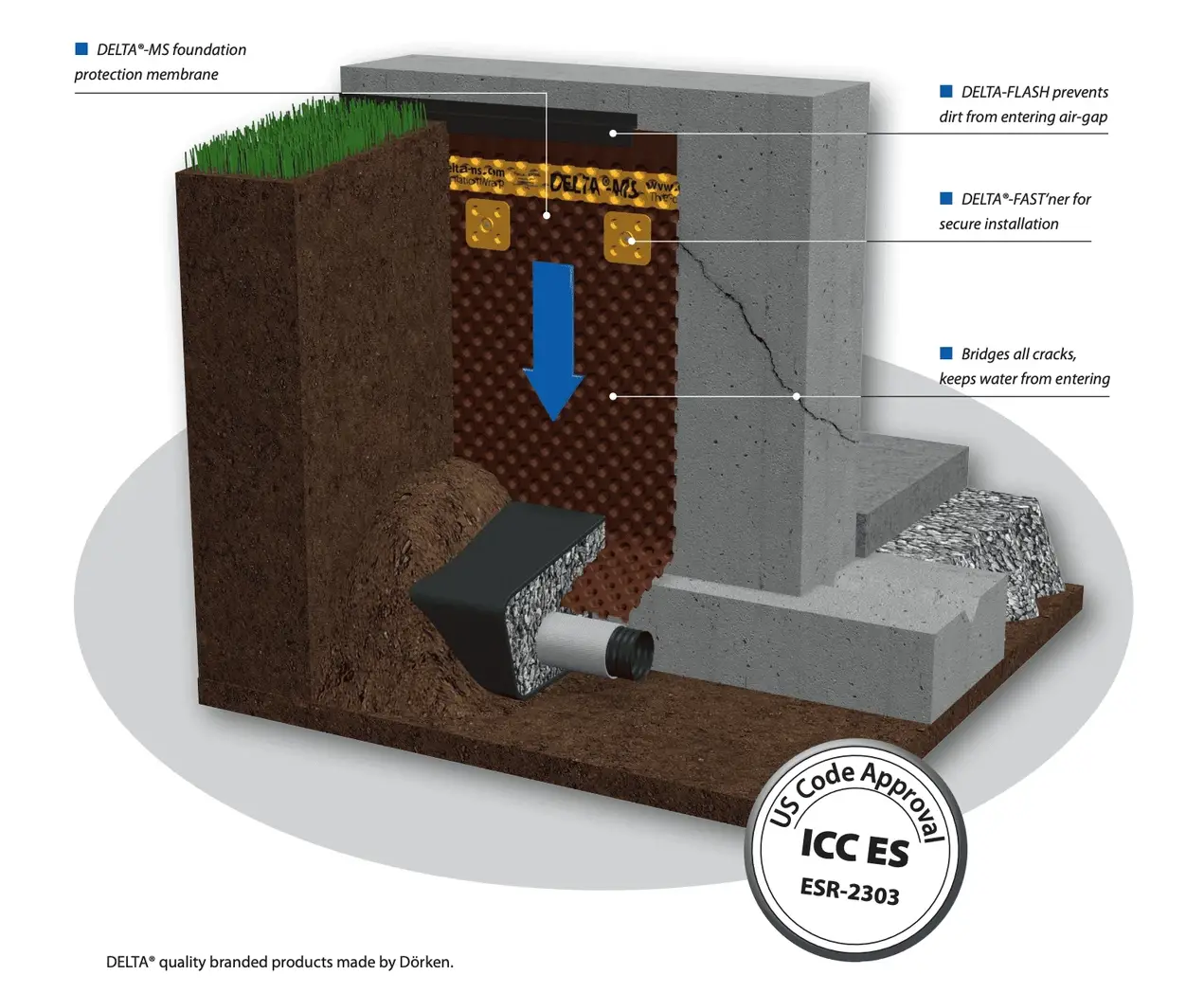
The types of issues can vary. It could be something like the drain boards are installed on the wrong side of the foundation, the grading of the backyard is causing excessive flooding, or an incorrect membrane was used.
Whatever it may be, an expert witness for drainage and waterproofing failures will help identify the issue, document it, and develop a correction to showcase in court.
3. Work That Doesn’t Match Plans or Permits
A construction expert witness can also help cases in which the construction doesn’t match the stamped plans or city/county permits.
Common examples include:
- Additions built to the wrong size or scope
- Basement construction that doesn’t meet plans or drawings
- Seismic retrofit with visible hardware but missing connections
- Work performed without the required permits
- Permitted work that diverged from the approved plans
Such a dispute turns on comparisons. An expert witness will look at what the documents authorized and compare it to what exists on the property.
4. Contract, Change-Order, and Repair-Cost Disputes
An expert witness can also help with disputes that are to do with the contract, what change orders added or removed, what was billed versus what was built, and what correction should reasonably cost.
A construction contract dispute expert will connect the paper record to the physical record. This makes scope gaps, unbilled extras, and inflated cost-to-cure claims clear when disputed in court.
Lead Paint, Silica Dust, and Construction Safety Cases
Construction disputes aren’t only about what was built. It can also be about how the work was performed and who was exposed to what while it happened.
Lead, asbestos, and silica are three common factors when it comes to renovation disputes. Exposure to these materials can cause harmful medical issues if proper handling techniques aren’t used.
How Lead and Silica Exposure Cases Arise
Lead cases are more common in homes built before 1978, when lead-based residential paint was banned.
Due to the hazardous dust it can produce, the EPA’s Renovation, Repair, and Painting Rule requires certified contractors for any work that disturbs paint in these homes, for example, sanding, cutting, or demolition.
Because of this, disputes normally follow a similar pattern. A contractor who wasn’t specialized in handling this material spreads the dust into kitchens, bedrooms, or an HVAC system because they didn’t use any HEPA controls or containment techniques.
Silica cases follow similar logic. Cutting, grinding, or drilling concrete, stone, and masonry generates respirable crystalline silica, which is why OSHA’s silica standard for construction requires specific dust controls for such work.
For both cases, the dispute is simple. How was the work performed, and did it follow correct safety standards?
The Construction Expert’s Role in Exposure Cases
A construction expert witness addresses the construction side of that exact question.
Within their role, they will:
- Document the work performed and the conditions observed
- Explain the construction means and methods involved
- Evaluate whether practical lead-safe or dust-control measures appear to have been used
- Identify how dust could have been generated and spread throughout the property
- Review project documents, photographs, and communications
- Explain the construction issues to attorneys, insurers, and other professionals
The value of having such an expert witness comes down to familiarity. Such an expert witness has performed lead-safe practices and silica dust control before and is able to identify, document, and provide evidence of whether proper methods were followed.
Where Medical and Legal Conclusions Belong
Something important to understand is that a construction expert documents and explains the construction conditions, work practices, materials, and exposure pathways. A construction expert can evaluate whether the work was performed according to the plans, contract documents, applicable requirements, and reasonable construction practices.
Whether a specific exposure caused a particular medical condition is a question for qualified medical professionals. Medical professionals evaluate diagnosis, causation, treatment, and health effects.
Legal conclusions and legal strategy belong to the attorney and, where applicable, the court. A construction expert can provide technical findings and expert opinions about the construction work, but does not determine whether a party is legally liable, whether a claim should succeed, or what legal remedy should be pursued.
In practical terms:
- Construction expert: What work was performed, how it was performed, what exposure or defect may have resulted, and whether the work appears consistent with applicable construction practices.
- Medical professional: Whether the exposure caused or contributed to a specific illness, injury, or medical condition.
- Attorney or court: The legal significance of the facts, liability, damages, legal strategy, and available remedies.
The Construction Defect Investigation Process
Every dispute will be different, but a construction expert witness’s investigation processes always follow the same sequence.
Step 1: Case Intake and Scope Discussion
The investigation starts with a conversation about:
- What the dispute is about
- Who is involved
- What has already happened
- Is there any conflict of interest
During the intake, the expert witness will also define a scope for which questions the analysis needs to answer and which fall outside the expert’s area of expertise.
For example, a case about lead exposure may need a construction expert witness as well as a medical professional. The construction professional can identify how the lead exposure occurred during the project, and the medical professional can determine whether this exposure caused a certain health issue.
Step 2: Document Review
Afterward, they’ll review all documentation related to the project:
- Contracts
- Plans
- Permits
- Change orders
- Prior reports
- Photographs
- Video
Reviewing them before the inspection is important. The construction expert witness can then visualize the work that was meant to get done and compare it to what was actually done.
Performing this comparison-like work is where the case can start to be built. If the contracts, plans, or permits say one thing and the construction says another, that’s a solid foundation.
Step 3: Site Inspection and Field Documentation
The site inspection is where all the physical evidence lies. Here, the expert witness will assess the construction based on the case intake, scope discussion, and document review.
What they’ll analyze depends on the dispute itself. However, it could be anything from foundations, drainage paths, seismic retrofits, and more.
While performing the site inspection, field documentation will be collected. This will be in the form of measurements, photographs, to-scale drawings, and annotations.
Collecting such documentation ensures that the findings rest on a record, not just recollection, which is ideal for anyone who may question the expert witness in the future.
Step 4: Comparing Built Conditions to Plans and Standards
With the record and the field documentation in hand, the analysis compares what was built against what was specified.
The analysis can involve comparing:
- The project to the plan
- The project to the contract
- The project to applicable standards
- The project to manufacturer requirements
- The project to ordinary practices
That comparison helps identify defects, scope gaps, causation issues, and the repair implications that may follow them.
Step 5: Written Findings and Testimony
Once all the information has been gathered, the investigation ends in writing, where findings, reports, and exhibits will be prepared in plain English.
The ‘plain’ English part is important. Writing in such a way ensures that attorneys, insurers, arbitrators, and juries who may not be familiar with construction practices can understand the dispute being represented.
When appropriate, the expert witness supports those findings through construction depositions and trial testimony. This may not be required for all disputes, but when it’s needed, the expert witness is able to perform it.
What Makes a Construction Expert’s Analysis Useful?
There are seven core reasons that make a construction expert’s analysis useful:
- Evidence-based: Every finding is based on documented evidence, observations, measurements, and records.
- Property-specific: The analysis carried out addresses this property, this contract, and these conditions.
- Understandable: Judges, jurors, and claim adjusters aren’t builders, so the findings are written in plain English so a non-technical reader can understand.
- Honest about limits: A quality report is clear about what’s known and equally clear about what still requires investigation.
- Grounded in real practice: Reports are developed by contractors with real-world experience, so they understand the exact processes that need to be followed.
- Connected to repair: The findings detail a realistic correction or repair scope so the entire argument is covered.
- Within experience: The expert stays within their actual area of experience because that is what they know.
When You Need an Expert Witness vs Other Claim Support
Not every construction problem calls for formal litigation support, and starting on the right track saves property owners time and money.
Three tiers cover most situations:
CSLB, Bond, and Insurance Documentation
When an owner’s goal is to document defective or incomplete work, the first steps are often regulatory and contractual rather than judicial.
The California Contractors State License Board accepts complaints against licensed and unlicensed contractors. Licensed contractors carry surety bonds that claims can be filed against. Separately, insurance policies may respond to certain losses.
Each of those runs on documentation. Thorough measurements, photographs, itemized defect lists, and clear written findings are what give CSLB complaints, bond claims, and insurance claims substance to work from.
SB 800 Construction Defect Claims
SB 800, California’s Right to Repair Act, can be relevant to certain residential construction defect matters.
The act itself sets out standards and pre-litigation procedures for qualifying claims, but whether it applies to a particular property and dispute is a legal question for an attorney.
Where it does apply, an SB 800 construction defect expert can support the process with the technical half. The expert witness will carry out their usual documentation, analysis, and observation to help the case.
When Formal Litigation Support Is Appropriate
Construction expert witness work is formal and is intended for active or anticipated disputes where attorneys, arbitrators, judges, or juries may need technical analysis.
Therefore, the more severe the case, the more a construction expert witness is recommended. Our guide to construction defects, claims, and expert witnesses can walk through the three different tiers.
Technical Subjects Within Avant-Garde’s Experience
An expert’s analysis is only as good as the field experience that they have behind them.
At Avant-Garde, we’re a second-generation Bay Area construction firm, with decades of hands-on experience completing 3,000+ projects since 2009.
With our expertise and experience, we can be your expert witness for construction projects in California. We’re specialized in several technical subjects, including the following:
Foundations, Framing, and Load Paths
The core of our field expertise sits on foundations, foundation replacement, structural framing, beams, posts, headers, and the load paths that connect them together. Much of this experience comes from our seismic retrofit projects, where these very elements fight against storms and earthquakes.
Drainage, Waterproofing, and Below-Grade Work
Alongside this, we’re experts in drainage systems, water intrusion, waterproofing and drain-board installation, basements, and below-grade construction. A lot of this work is remedial, such as replacing French drains and correcting incorrectly installed waterproofing, so we know exactly which shortcuts cause systems to fail.
Roofing, Windows, WRB, and Flashing
We also cover roofing, exterior wall systems, weather-resistive barriers, flashing, windows, and doors for new builds and refurbishments. Because we carry out this work on a regular basis, we understand popular manufacturer specifications and the processes required for a successful installation.
Seismic Retrofits and Soft-Story Conditions
One of our core trades is seismic retrofitting, including foundation bolting, cripple-wall bracing, shear transfer connections, and soft-story strengthening. Our team also evaluates the work of other contractors’ retrofits through our Seismic Truth Audit service, so we know the clear difference between a compliant and non-compliant project.
Owner-Builder and Unlicensed Work
Often, we’re brought in to assess and correct owner-builder projects and unlicensed work, where permits have been skipped, or the workmanship is poor. Therefore, we have experience in analyzing all types of projects, providing us with an eye for identifying compliance or permit issues.
Scope, Payment, and Contract Disputes
For all our projects, we write itemized scopes, price repairs, and manage change orders every day. That estimating and management experience is what enables us to compare what a contract promises, what was built, and what was billed, helping with disputes in this area.
Frequently Asked Questions
What does a construction expert witness do?
A construction expert witness inspects disputed construction projects by reviewing the project documents, comparing the plans to what was built, and providing written findings and possibly testimony when needed.
What documents does an attorney send for an initial review?
Incomplete records are fine to start, but it’s best to provide contracts, plans, permits, change orders, prior reports, photographs, videos, and anything else that’s relevant.
Can an expert inspect work after it has been demolished or covered?
Yes, but it depends. Documented reviews, photographs, and physical evidence can still be used in court, but the expert witness will clearly state what can and cannot be used as verifiable evidence.
Can a contractor serve as an expert witness?
Yes, hands-on building experience is exactly what many construction disputes need. However, someone trained in construction expert witnessing would be much more advantageous.
When should you hire a construction expert witness?
Before the evidence disappears or as soon as legal action has begun. By doing so, they’ll be able to gather the evidence needed to fight the dispute.
How long does a construction defect investigation take?
It depends largely on the scope of the project. Some factors that increase or decrease the time required for these investigations are document volume, site access, and how much physical evidence remains.
Can guarantees be made when hiring an expert witness?
No. A credible expert will provide an evidence-based analysis. Any expert who promises positive results should be avoided.
How to Start an Expert Witness Review
The best time to hire a construction expert witness is before the evidence disappears. Therefore, if you’re an attorney, property owner, insurer, or other professional dealing with a construction dispute, send us the basic facts. We can review the matter and determine whether it’s a good fit for our experience and available services.