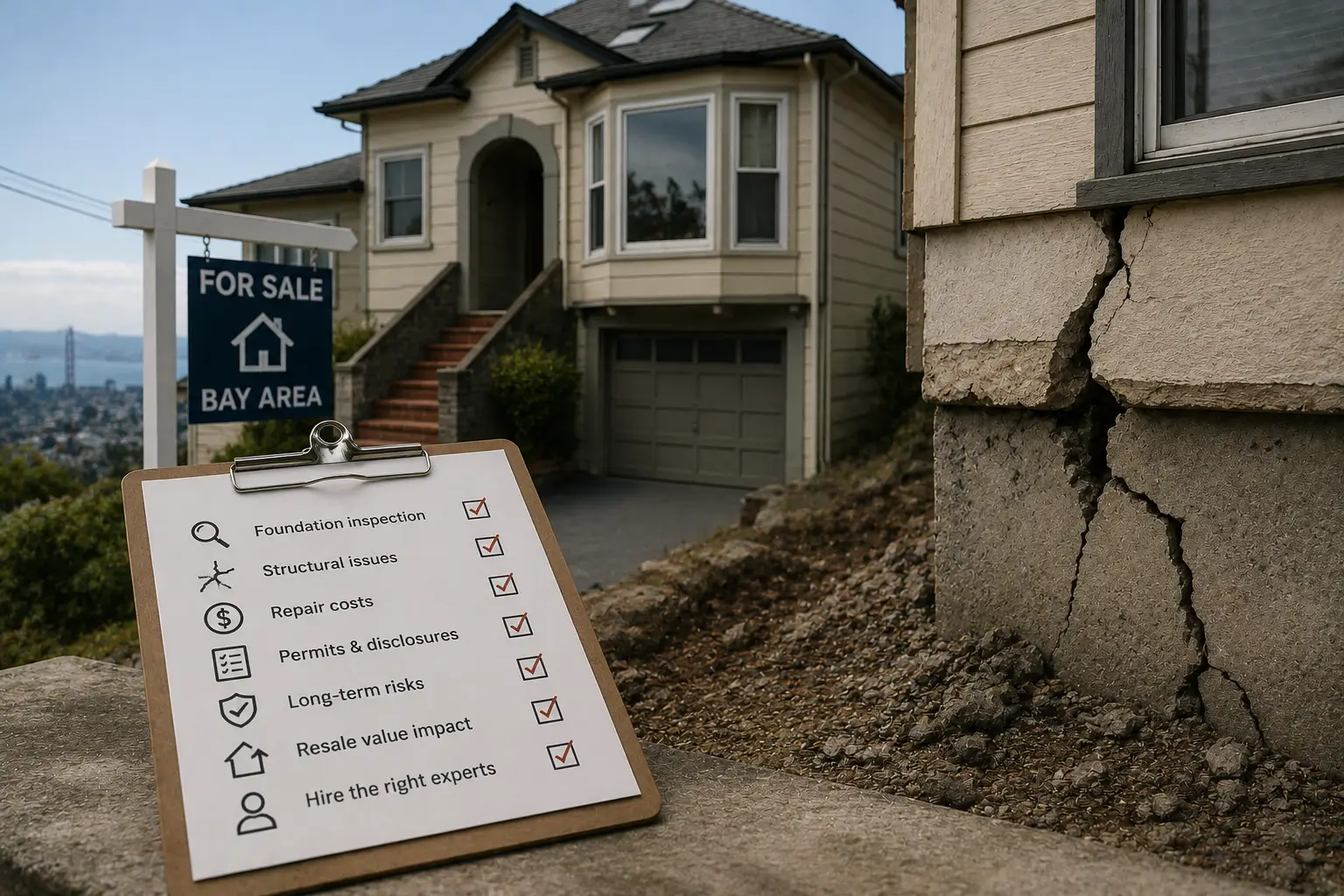
Buying a Bay Area House With Foundation Problems: What You Need to Know
You find a house you like. Then the inspection report lands:
“Evidence of foundation movement / cracking / settlement observed.”
Now you’re asking:
- “Should we walk away?”
- “Is this fixable?”
- “How bad is bad?”
In the San Francisco Bay Area, a lot of older homes have some foundation issues. The key is knowing when it’s:
- A negotiable repair, vs
- A major structural and drainage problem, vs
- A deal‑breaker for you.
This article walks through how to think about buying a home with foundation problems, and how to avoid getting stuck with a disaster.
1. Not All “Foundation Problems” Mean the Same Thing
Common phrases in reports:
- “Typical cracking for age”
- “Evidence of past movement”
- “Recommend further evaluation by a specialist”
These can mean:
- Minor, mostly cosmetic cracks that can be monitored
- Old movement that has stabilized
- Active issues (settlement, heave, water) that need real work
You’re trying to answer three questions:
- Is it moving now?
- What’s causing it (soil, water, design, age)?
- What will it realistically cost to address?
A generic home inspection is not equipped to answer those in detail. That’s where a specialized structural/foundation evaluation comes in:
Seismic, Foundation & Drainage Services
2. Red Flags That Call for a Specialist (Not Just Your Agent’s Opinion)
You should bring in a seismic/foundation specialist when you see:
- Noticeable sloping floors or “dished” rooms
- Doors and windows sticking or racking
- Cracks above windows/doors and at corners that look recent or widening
- Large, stepped, or multiple foundation cracks
- Spalling, delamination, or heavy efflorescence on concrete
- Standing water or very damp soil under the house
- Retaining walls leaning or bowing near the structure
These are exactly the symptom patterns we designed our diagnostic content around:
- Why Are My Floors Sloping in the Bay Area?
- Why Do My Doors Suddenly Stick?
- Why Are Cracks Appearing Above My Windows and Doors?
- Why Is There Standing Water Under My House?
(Find these in our blog: https://www.avant-gardece.com/blog/)
3. How Foundation Problems Affect Price, Safety, and Financing
Foundation issues impact you on three fronts:
- Safety & performance
- How will the house behave in an earthquake?
- Are you compounding risk by adding remodel loads later?
- Immediate and future cost
- Are you facing $15K of repair… or $250K of combined foundation, drainage, and seismic work?
- Will future buyers discount the property if it’s not addressed?
- Lenders & insurers
- Some lenders and insurers get skittish about unresolved, documented structural problems.
- Clean documentation and a realistic plan help.
For real‑world cost ranges:
- How Much Does a Seismic Retrofit Cost in the San Francisco Bay Area?
- How Much Does Foundation Replacement Cost in California?
4. Why You Need More Than a 10‑Minute “Free Look”
In escrow, everyone’s in a rush. That’s when bad decisions get made.
A 10–15 minute free walk‑through is not enough to:
- Crawl the entire accessible space
- Map supports and foundations
- Understand water and drainage behavior
- Decide between repair, partial replacement, or full replacement
- Decide how much seismic work is needed and what type (Plan Set A, FEMA, or engineered)
That’s why we draw a hard line between quick opinions and real evaluations:
- Free Estimates vs. Real Evaluations: How to Choose the Right Path for Bay Area Seismic & Foundation Work
- Why Site Consultation Fees Are Worth It for Seismic Work
5. Smart Ways to Use Foundation Problems in Negotiation
If you like the house but the foundation needs work, you can:
- Negotiate a price reduction based on documented repair/replacement estimates
- Negotiate seller credits at closing to help fund immediate safety work
- Make closing contingent on getting a specialist’s evaluation and clear cost range
The difference between “we think it’s about $X” and a real, written scope from a foundation/seismic specialist can be tens or hundreds of thousands of dollars in your favor.
Our evaluations and reports are often used exactly this way in escrow and SB800 contexts:
SB800 Construction Defect Evaluation & Technical Mapping
6. When You Should Probably Walk Away
It may be wise to walk if:
- The combined foundation + drainage + seismic work required is way beyond your risk tolerance or cash flow
- The seller refuses to acknowledge or negotiate around clear, documented issues
- Multiple specialists agree you’re looking at a major structural rebuild and you weren’t planning that level of project
Sometimes the best deal is the one you don’t do. But you should base that choice on real data, not fear or hand‑waving.
7. What To Do if You’re in Escrow on a “Problem” House
If you’re buying in the Bay Area and an inspection flagged foundation issues:
- Get the right specialist involved immediately.
Don’t rely on generic “further evaluation recommended” language.
Seismic, Foundation & Drainage Services - Use a paid evaluation, not a free estimate.
You want:- Crawl‑space and foundation documentation
- Drainage and soil observations
- Seismic and structural recommendations
- Realistic cost ranges for different levels of fix
- Decide with eyes open.
- Keep the house and negotiate smartly
- Keep the house and budget for phased work
- Or walk away and keep looking
Buying a Bay Area home with foundation problems isn’t automatically a bad idea. Doing it blind, without a proper seismic/foundation/drainage evaluation and a realistic plan, is.