5.6 Mendocino / Ukiah Earthquake: What It Means (And Doesn’t) For Bay Area Homeowners
San Francisco Bay Area
June 24, 2026
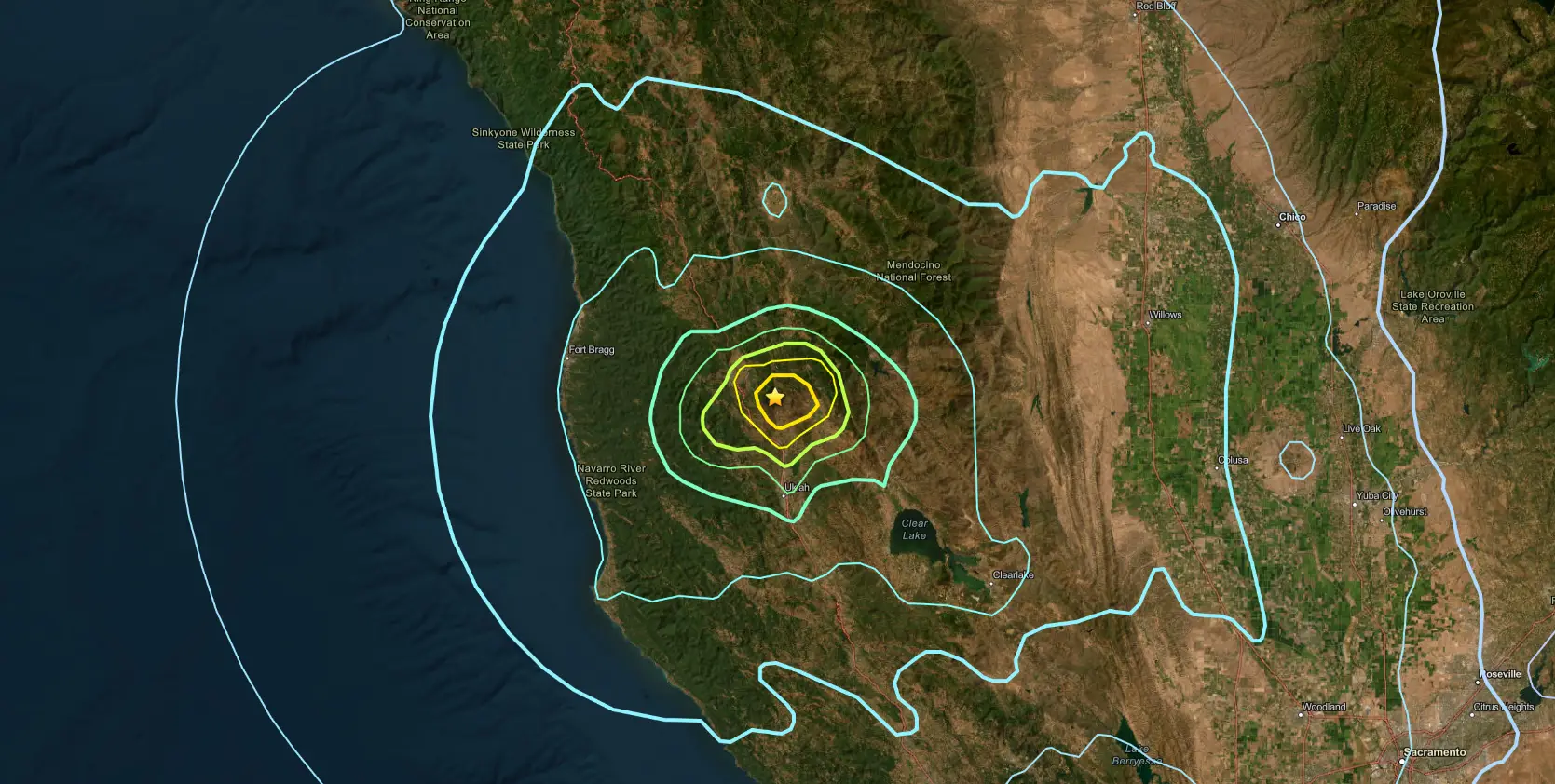
On the morning of June 24, 2026, a magnitude 5.6 earthquake struck north of Ukiah, near Redwood Valley and Potter Valley in Mendocino County, at about 8:10 a.m. according to the USGS. The quake was shallow (around 5 miles / 8 km deep) and strong enough to trigger phone alerts and be felt across a wide swath of Northern California, including parts of the Bay Area. https://earthquake.usgs.gov
Local reports describe:
- Short, sharp shaking in towns like Redwood Valley, Willits, and Ukiah
- Power outages to thousands of customers and brief evacuations of some public buildings
- Items knocked off shelves, frames off walls, but no immediate reports of widespread structural collapse so far (apnews.com)
For Bay Area homeowners, the natural questions are:
- “Is this a warning shot?”
- “Does this change my risk?”
- “What should I actually do about it?”
This article will keep it simple: what this 5.6 does and doesn’t mean for your house, and the steps that always make sense after a regional wake‑up call.
For a broader look at the Bay Area’s long‑term risk, see:
Is the Big One Coming to the Bay Area?
What Happened Near Ukiah
Key facts from USGS and news outlets:
- Magnitude: 5.6 (moderate)
- Location: ~11 km (7 mi) north of Redwood Valley, ~15 miles north of Ukiah, about 140–150 miles north of San Francisco (theepochtimes.com)
- Depth: about 5 miles (8 km)
- Time: ~8:10 a.m. PT
- Impacts so far:
- Strong short jolt near the epicenter
- Power outages in Mendocino County
- Some minor damage (fallen items, broken glass) and a few reported injuries, but no immediate reports of major building collapses as of this writing (apnews.com)
It’s being described as the strongest quake in that immediate inland Mendocino region in decades, in an area that is not directly on one of California’s “headline” faults, but still within a very seismically active part of the state. (apnews.com)
Why Bay Area Phones Screamed Even If You Felt Nothing
Many Bay Area residents got ShakeAlert / MyShake notifications and didn’t feel shaking. That’s expected for a few reasons:
- A M5.6 is big enough to send weak to light shaking 100–200+ miles from the epicenter, but local soil, building type, and what you were doing all affect whether you notice it.
- The warning system is designed to err on the side of caution: if the model thinks a certain area might get noticeable shaking, it will send alerts even if the eventual intensity is low.
In other words:
- The alert system did what it’s supposed to do.
- The fact that you didn’t feel it doesn’t mean it was a false alarm.
We wrote about what to do when you see “earthquake near me” in the news or in an alert here:
Earthquake Near Me Today: What Bay Area Residents Need to Know About Seismic Safety
Does This 5.6 “Increase” the Bay Area’s Risk?
Seismologists are usually careful here for good reason. A few key points:
- A single moderate quake like this does not suddenly make the San Andreas or Hayward faults “overdue” – they were already on long‑term clocks.
- Earthquakes redistribute stress locally, but that effect decays with distance. A 5.6 north of Ukiah is not the direct trigger for a large Bay Area fault rupture 150 miles away.
- What it does do is remind us that California’s crust is active in ways we don’t always see on the surface, and that moderate inland quakes can shake a wide area. (arxiv.org)
Practically speaking for a homeowner:
- Your long‑term risk didn’t suddenly change yesterday.
- It was already high enough to justify retrofit and preparedness if you live in an older Bay Area home.
The Real Takeaway: Moderate Quakes Are a Dress Rehearsal
Events like the Ukiah/Redwood Valley 5.6 are small compared to the “Big One” scenarios, but they’re big enough to:
- Test alert systems (many people saw their phones light up)
- Reveal loose contents and nonstructural hazards (falling items, unsecured cabinets)
- Expose weak structures near the epicenter (older non-retrofitted buildings, bad foundations, etc.)
For Bay Area homeowners, a moderate quake elsewhere is a free question:
“If this had been a 5.6 under my town – or a 6.8–7.0 on the Hayward or San Andreas – what would my home and family experience?”
If you’re not sure how to answer that, these resources are a good starting point:
- Your Home vs The Next Earthquake: A Practical Guide for Bay Area Owners
- Does My Home Need an Earthquake Retrofit? A Bay Area Homeowner’s Guide
Action Checklist After a Regional Quake
Even if your house is far from the epicenter, it’s smart to use the news as a trigger for action, not just conversation.
Step 1 – Check your own home
- Look for new cracks around doors, windows, and foundations.
- Check for fallen items, shifted water heaters, or gas smells (and know how to shut off gas if needed).
- Walk your crawl space or basement (if safe) for any obvious new tilts, separations, or water issues.
For recurring “mystery” symptoms like sloping floors, sticking doors, or recurring cracks, see:
Step 2 – Decide your performance goal
Ask yourself:
- “In a big Bay Area quake, do I only care about life safety, or do I also care about being able to repair and re‑occupy without moving out for months?”
That answer drives:
- How far beyond minimum code you should go
- Whether a simple brace‑and‑bolt is enough or a full load‑path retrofit makes more sense
We wrote about setting realistic performance goals here:
How to Set Earthquake Performance Goals
Step 3 – Get a real evaluation (not just a free estimate)
If this quake got you thinking about real changes, the next step is not a 10‑minute visit and a lump‑sum number. It’s a structured evaluation that gives you:
- Crawl‑space / foundation walk‑through
- To‑scale drawings
- Photos
- Written findings
- Clear options and costs
That’s how our core visits are set up:
What If Your Home Was “Retrofitted” Years Ago?
The Mendocino 5.6 will likely prompt a lot of owners to say, “Good thing we retrofitted back in 2000 / 2010 / 2015.”
For some, that’s accurate. For others, it’s wishful thinking. As CBS and other outlets have reported, and as we see in our own work, many older retrofits:
- Meet only the paperwork requirement of grant programs
- Ignore critical connections in the crawl space and posts/piers
- Use hardware and nailing that looks right but doesn’t match any tested detail
If your house was retrofitted under older programs or by the lowest bidder, this might be the right time to verify what was actually done:
- Seismic Truth Audit™ – Existing Retrofit Reality Check
- Why Most Earthquake Retrofits Don’t Do What Homeowners Think
The Bottom Line
The 5.6 Mendocino / Ukiah earthquake is not the Big One, and it doesn’t suddenly change the Bay Area’s long‑term risk curve. It does something more useful: it reminds us that:
- Moderate quakes can happen inland, away from the famous faults
- ShakeAlerts can light up phones across the region
- Buildings near the epicenter get a true stress test
Your best move is not to obsess over this specific fault, but to use the event as a nudge to:
- Inspect your own home
- Clarify your performance goals
- Get a real evaluation and plan instead of hoping the house you’re in “will probably be fine”
If you want help turning that intention into a concrete plan for your specific home, that’s exactly what we do every day in the Bay Area:
Seismic, Foundation & Drainage Services