Water Damage in Concrete Foundations: Causes & Signs
Concrete foundations are literally the key to a property’s stability. If a foundation fails, the entire property is at risk.
A common issue with such foundations is water infiltration. It’s often cited as the most common cause of foundational repairs.
However, how does it damage concrete foundations, and how can you tell if your foundation is experiencing water damage?
How Water Damages Concrete Foundations
Though concrete may seem rock-solid, it’s a porous material. Therefore, when moisture penetrates into cracks or microscopic pores in the concrete, it initiates processes that gradually weaken the integrity.
This can occur because of the following:
- Moisture Penetration & Leaching: Plain water soaking into concrete can dissolve certain compounds (like calcium hydroxides) and leach out lime, slowly weakening the concrete.
- Freeze-Thaw Cycles: In cold climates, water inside concrete pores freezes and expands 9% larger than its liquid form. Therefore, each freeze exerts internal pressure, widening cracks.
- Reinforcing Steel Corrosion: Most modern foundations are reinforced with steel rebar. If water reaches the rebar (especially water containing chloride salts), it can start corrosion and destroy the rebars’ high alkalinity coating.
- Chemical Attack (Chlorides & Sulfates): Water can carry aggressive chemicals that attack concrete, for example, chlorides and sulfates. Together, they can break down concrete and make it weaker.
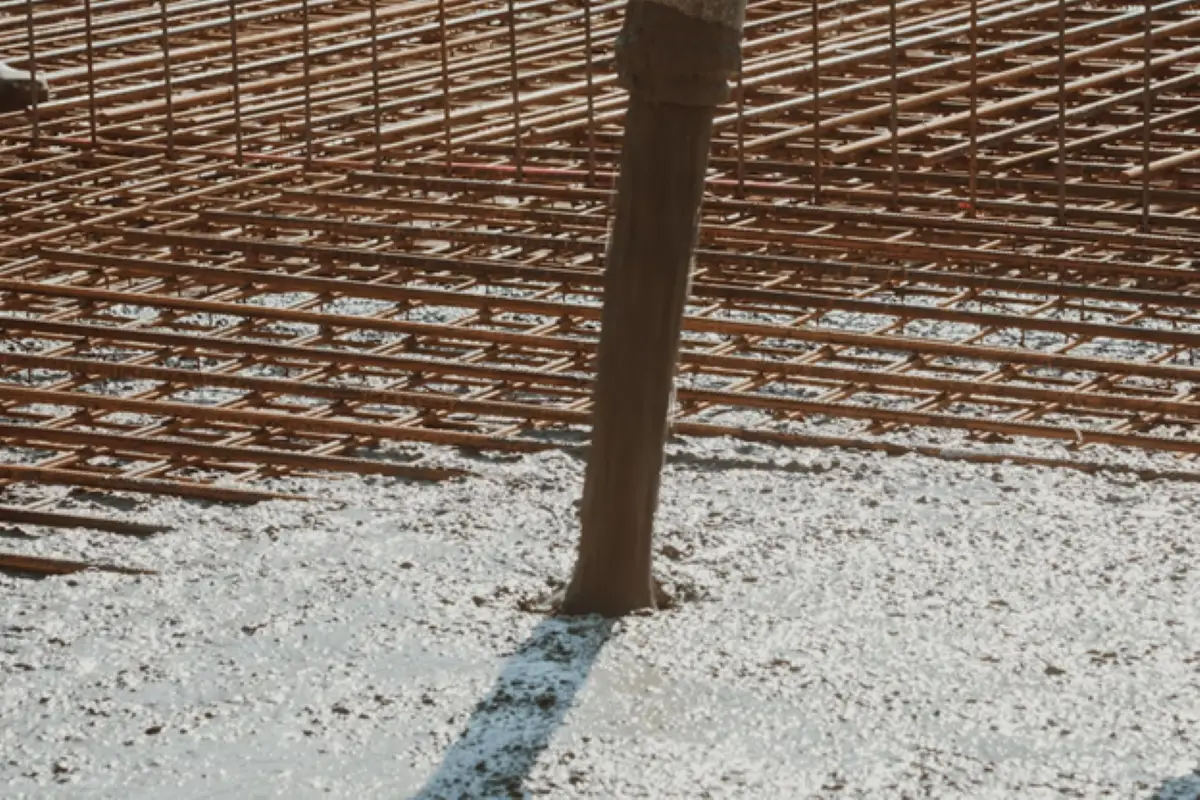
- Poor Contractions & Curing Practices: Alongside the above, how the concrete is mixed, placed, and cured affects its resistance to water.
Water-related deterioration to the concrete foundation is often slow.
However, it’s progressive, so once it reaches a critical point, damage can accelerate quickly.
Common Signs of Water-Related Deterioration in Concrete
When water infiltrates a concrete foundation, it produces some key characteristics. Some of the main signs that concrete is undergoing water-related deterioration include the following:
Spalling
Spalling is the breaking, chipping, or flaking off of surface concrete in patches. It often appears as roughly circular or oval depressions where the top layers have crumbled away, often exposing coarse aggregate or rebar.
Causes
- Freeze-Thaw Damage: Water that seeps into the concrete freezes and expands, popping off surface layers over time.
- Corrosion of Reinforcement: Rusting rebar swells inside the concrete, creating internal pressure that forces the concrete to delaminate and break off.
- Chemical Attack: Exposure to sulfates in the soil of alkali–silica reaction (ASR) can weaken concrete from within.
- Poor Surface Concrete or Overloading: A weak surface layer (from poor finishing or low-strength mix) may spall under minor stress.
Impact
Apart from making the concrete look visually unappealing, it can reduce the concrete cover protecting the steel reinforcement. Even very shallow spalls expose a porous edge that lets in more water, which can accelerate the corrosion of rebar and cause further damage.
Scaling
Scaling is the flaking or peeling away of thin layers of the concrete surface, often in sheets or small flat fragments.
It starts as a patch, shallow peeling, and can progress to deeper loss, exposing aggregate.
Causes
- Freeze-Thaw Damage: Scaling is mostly caused by water freezing in the concrete’s surface pores.
- Early Exposure to Frost or Salts: New concrete, less than a year old, is very vulnerable to frost and salts.
- High Water-Cement Ratio: A weak surface due to too much mixing water will have many pores, resulting in more scaling.
- Abrasion and Wear: Heavy mechanical abrasions, like tires and equipment, on a saturated concrete surface can also cause a scaling-like effect.
Impact
Scaling primarily affects the durability and appearance of concrete. Light scaling, for example, very minor peeling, is only cosmetic. Moderate to severe scaling, though, can expose coarse aggregate and weaken the cover layer of concrete.
Blistering
Blistering refers to the formation of bubble-like, hollow bumps on the surface of freshly placed concrete. These are typically small domes (from a quarter-inch up to a few inches in diameter) with a thin layer of mortar on top and a void underneath.
Causes
- Premature Finishing: This is the most common cause, fishing the slab too early, sealing the surface while bleed water or entrapped air is still coming up.
- High Concrete Slump or Vibration Issues: Excessive vibration or a very wet concrete mix can drive aggregate down and bring up a thick mortar layer that seals the top too soon.
- Rapid Evaporation Conditions: Wind, hot temperatures, or low humidity can cause the slab surface to appear dry while the underlying concrete is still bleeding water.
- High Air Content: Air-entrained concrete (especially if air % is higher than needed) naturally bleeds less, which can fool workers into sealing it early.
Impact
Blisters are primarily a finishing defect, but they can become a long-term durability issue. If left, they may break under traffic or pressure, leaving behind a small crater on the surface. These openings can make the concrete more prone to abrasion, water ingress, and staining.
Efflorescence
Efflorescence is the white, powdery deposit that sometimes forms on concrete or masonry surfaces. This occurs when water inside the concrete carries soluble salts to the surface. The water then evaporates and leaves behind those salts as a whitish crust.
Causes
- Moisture Migration: When water percolates through concrete, it dissolves some salts and then deposits them on the surface as it evaporates.
- Humidity and Temperature Changes: Rain, condensation, etc., can introduce moisture, and then drying draws the moisture out, carrying salts.
- New Construction: New concrete has excess soluble compounds. If not cured properly or protected from water early on, moisture movement can occur.
- Lack of Waterproofing or Vapor Barrier: Failed waterproofing on a foundation means groundwater can seep through the concrete, bringing salts along with it.
Impact
Efflorescence can weaken concrete over time because it is a symptom of underlying moisture problems, and the salt crystallization can exert pressure that breaks apart the concrete’s surface. While efflorescence itself may seem harmless, the persistent moisture that causes it can lead to more significant damage, including cracks, spalling (flaking or delamination), and a weakened surface over the long term.
Curling
Curling is the distortion of a concrete slab into a curved shape, where the edges or corners lift (or sometimes drop) relative to the center. Generally, it occurs in slab-on-grade foundations or concrete floors.
Causes
- Moisture Differences (Dry Shrinkage): If the top of the slab dries out faster than the bottom, the top layers will shrink more, causing the slab edges to curl upwards.
- Temperature Differences: A temperature gradient can similarly cause one side of the slab to expand/contract relative to the other.
- Concrete Properties and Design: High water content mixes, large slab panels with long joint spacing, and thin flaps can make curling more pronounced.
Impact
Curling can create both structural and functional problems. When edges curl upward, they can lift off the subbase so the corns or edges are left unsupported. Heavy loads on such areas can then make the concrete crack or break.
Dusting
Dusting refers to a weak, powdery surface on concrete that easily brushes off as fine dust. If a concrete floor continually produces a film of gray dust or can be scratched with a fingernail, it is experiencing dusting.
Causes
- Finishing on Bleed Water: If the workers trowel or float the slab while bleeding water is still on the surface, it could lead to weakness and increase porosity.
- Adding Water or Cement During Finishing: Sprinkling water to re-temper the surface or broadcasting dry cement to soak up bleed water can weaken the surface layer.
- Cold Weather and Carbonation: In cold, damp conditions, if heaters are used or concrete sets slowly, the surface can get a dose of carbonation.
- Insufficient Curing or Protection: If it isn’t properly cured or is exposed to drying winds, rain, or freezing soon after placement, it may not gain full strength.
Impact
Dusting is mostly a problem for usability and maintenance. It can be difficult to clean and can be a continuous source of fine particles (which can reduce air quality).
Delamination
Delamination in concrete is the separation of a thin layer of concrete parallel to the surface, which results in a hollow plane or void within the slab. Essentially, the top surficial layer detaches from the base concrete below it.
Causes
- Premature Finishing or Trapped Bleed Water: Finishing and sealing the surface before the bleed water has escaped.
- Corrosion of Rebar Near Surface: If rebar is placed too shallow and then corrodes, it can cause a layer of concrete to detach.
- Freeze–Thaw Internal Cracking: Concrete that suffers freeze-thaw damage may develop a separate plan beneath the surface.
- Poor Bonding of Layers: If the foundation was poured in multiple lifts or had a resurfacing layer added, cold joints could appear with no strong bond.
Impact
Delamination is concerning because it suggests there’s a hidden defect that can suddenly become a failing hazard or a structural weakness.
Crazing
Crazing is a network of fine, shallow cracks on the concrete surface, often forming a kind of random, hexagonal pattern. These are very narrow cracks, sometimes a hairline, and only penetrate the top skin of concrete.
Causes
- Surface Shrinkage: Rapid drying and shrinkage of the surface layer.
- Excess Water in Mix: A high-slump concrete mix that, once it dries, is prone to crazing because of its high water-cement ratio.
- Improper Finishing: Techniques that overwork the surface or trap water at the top can cause crazing.
- Lack of Curing: Not curing the concrete in hot/dry conditions means the surface will dry out much faster than the interior.
Impact
Crazing cracks are mostly cosmetic and do not affect structural integrity. They are usually too shallow to impact the strength of the slab, and they generally do not widen or progress into serious cracks.
Cracks (Various Types)
These range from hairline width to gaping. They can also be classified by their cause and characteristics, like plastic shrinkage cracks, drying shrinkage cracks, settlement cracks, or structural cracks.
Causes
- Plastic & Drying Shrinkage: Either option will cause cracks to appear soon or long after the concrete has been placed.
- Thermal Cracks: Temperature can make the concrete expand or contract, which can cause cracks.
- Settlement & Soil Movement: Movement in settlement or soil can also cause structural cracks that can widen.
- Corrosion or Chemical Expansion: Corrosion rebar can produce cracks. Some chemical reactions can also have a similar effect.
- Overload or Structural Design Issues: If the concrete foundation is overloaded beyond its capacity, it can lead to cracks.
Impact
The impact depends on the crack itself. A small, hairline crack that isn’t growing is nothing to worry about. A large, gaping crack, on the other hand, may be concise and indicate an underlying issue.
Conclusion
After reading the above, you should have a better understanding of how water damage can occur in concrete foundations.
As you can see, the severity of water damage depends on the cause. While some are somewhat harmless, others aren’t.
If you’re unsure if your concrete foundation is damaged or needs to be replaced, leave it to the professional. Contact Avant-Garde today.