Program-Based Earthquake Retrofits
EBB, ESS, Plan Set A, FEMA P-1100 2A/2B
For Bay Area homeowners who want to use standardized retrofit programs and plans (like Earthquake Brace + Bolt, ESS, Plan Set A, FEMA P-1100), and want the work done correctly, not just cheaply.
The idea behind these programs is good:
- Simple, pre-approved designs
- Sometimes grant money to help pay
- Faster permitting
The problem is how they often get used: rush jobs to capture a grant, minimal inspection, and a “check the box” mentality that may or may not leave your house truly safer.
Our role is to execute these standardized designs at a high standard, so you get both the paperwork and the real protection.
What “Program-Based Retrofits” Are
We work with four main categories:
- EBB (Earthquake Brace + Bolt) and similar grant programs
- ESS and local utility/agency programs
- Plan Set A (City of Los Angeles pattern that’s influenced others)
- FEMA P-1100 2A/2B (updated prescriptive designs for cripple-wall and sill plate retrofits)
They all share a common structure:
- A prescriptive design (standard details, locations, and nailing patterns)
- A specific scope of work (cripple walls, sill plates, anchors, etc.)
- Defined inspection and documentation requirements
Our job is to apply those correctly to your house, not just follow the minimums blindly.
Who This Service Is For
You’re a good fit if:
- Your home is wood-frame on a raised foundation or low cripple walls
- You’re eligible for or already enrolled in EBB/ESS or similar
- Your city encourages or accepts Plan Set A / FEMA P-1100 designs
- You want to make sure the retrofit is actually done right, not just technically “complete”
You’re not a fit if:
- You’re dealing with a soft-story apartment (that usually needs a custom engineered design)
- You have major foundation failure that must be addressed first (we’d start with Foundation Evaluation & Repair)
What Our Program-Based Retrofit Service Includes
1. Eligibility & scope confirmation
We start by verifying:
- That your house is a good candidate for the specific program/plan set
- That the standard details cover your real-world conditions or where you might need engineer input
- What the program rules and documentation actually require (photos, measurements, forms)
If we see a mismatch (e.g., foundation too irregular, severe existing damage), we’ll tell you and suggest a better path.
2. Field layout & prep
We translate the standard drawings into a specific layout for your crawl space:
- Mark where each shear panel, anchor, and hold-down goes
- Identify areas where existing utilities, framing, or foundation require adjustments
- Coordinate with your engineer or program rep if field conditions differ from assumptions
This is where most bad jobs fall down: they “install parts” without checking if the system hangs together correctly in your house.
3. High-quality installation
We do the unglamorous work right:
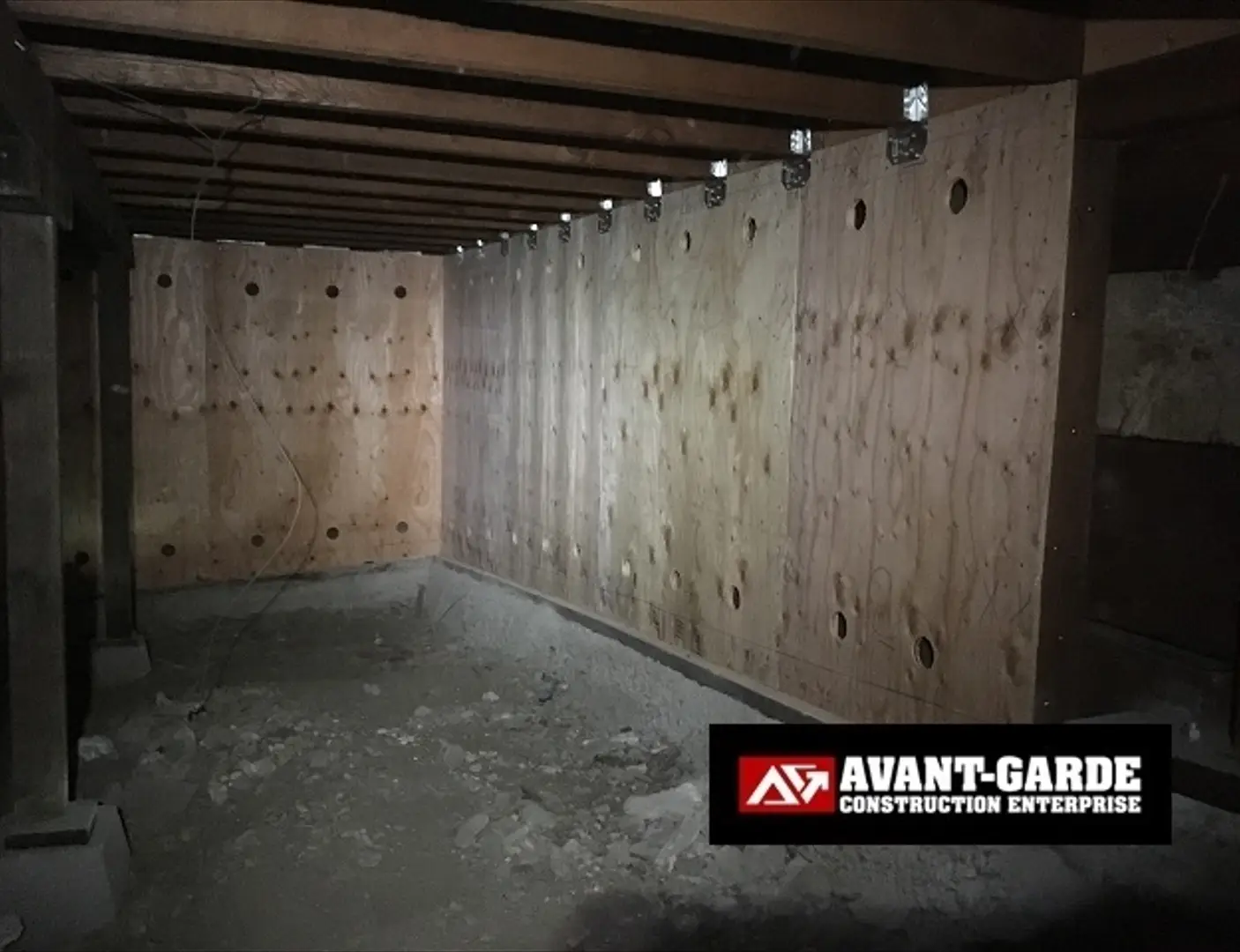
- Install cripple-wall sheathing, sill bolts, anchors, and hold-downs to spec
- Use correct fasteners and nailing patterns (not “good enough” guesses)
- Address any rotten or damaged framing that would weaken the retrofit
- Work cleanly in tight crawl spaces with attention to long-term durability
You’re not paying us to throw hardware at your house; you’re paying us to build a load path that will actually carry earthquake forces where they need to go.
4. Program compliance & documentation
For EBB/ESS and similar:
- We take required photos and measurements
- Fill out or support the necessary verification forms
- Coordinate with inspectors and program reps for any required site checks
For Plan Set A / FEMA P-1100 jobs:
- We ensure the work follows the approved details
- Provide you with a summary and photos you can use for future permit, insurance, or sale conversations
You should end this process with both a stronger house and a clean paper trail.
When Standard Plans Are Not Enough
Sometimes, during evaluation, we discover:
- Foundations that are too shallow, patchy, or irregular for simple anchor patterns
- Hybrid or heavily modified framing that doesn’t match prescriptive assumptions
- Other structural issues (major settlement, hillside movement) that must be engineered
In those cases, we’ll:
- Tell you clearly where the line is between what the standard plan can handle and where you need a custom design
- Work with your structural engineer to extend or modify the retrofit to match reality
The goal is not to force your house into a standard it doesn’t fit. The goal is to use the standard where it’s appropriate and bring in engineering where it’s not.
How the Process Works
1. Intake call
- Confirm program (EBB/ESS/etc.), foundation type, city, and prior work.
2. On-site evaluation
- Crawl-space inspection, measurements, and compatibility check with the chosen plan set.
3. Scope & agreement
- We outline exactly what we’ll do under the program and what, if anything, falls outside it.
4. Construction & inspections
- We perform the retrofit, coordinate inspections, and handle program documentation.
5. Final package
- Completed forms, photos, and a summary of work you can keep for insurance and future buyers.
If you want to take advantage of program-based retrofits without ending up with a lowest-bid, checkbox job, the next step is simple: let us look at your house and your program paperwork, and we’ll tell you exactly what a proper EBB/ESS/Plan-set retrofit looks like for your specific situation.