Why Bay Area Homeowners Shouldn’t Wait for a Soft-Story Retrofit
If your home has a living space built above a garage, you may be sitting on a common and rather expensive seismic risk in California.
These spaces are classified as a “soft-story” condition. It means that the living space has been built above a structure, mostly garages, that has less stiffness and strength than the floors above it.
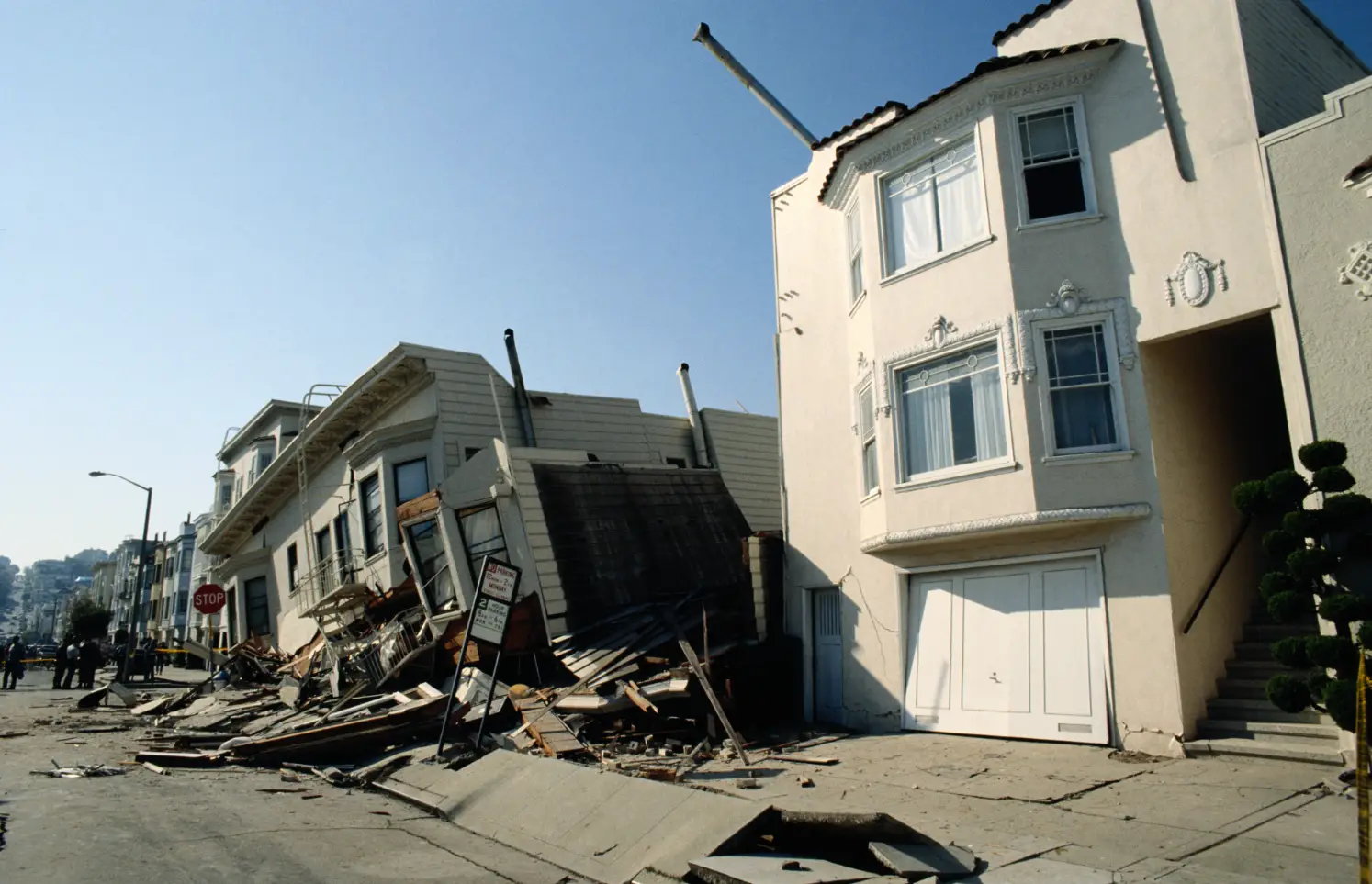
In the event of a large earthquake, like the “Big One”, these spaces are likely to collapse. That’s why we recommend every homeowner with a soft-story to properly retrofit it before it’s too late.
What Is a Soft-Story Home?
A soft-story home is where a structure, normally a ground-floor, has less strength and stiffness than the floors above it. In most residential cases, this is a garage due to its large door opening.
The large door opening is a structural problem. It gives very little solid wall, which is required to resist the lateral forces generated by earthquake shaking. Without it, the garage can quickly collapse, regardless of the strength of the additional living space above it.
Why Bay Area Soft Story Homes Are at Risk
When the ground shakes, a building needs to protect itself from lateral forces. This force travels from the roof and upper floors down to its walls and foundation.
With a soft-story home, this is a huge problem. The upper floors are stiff and strong, and the lower floors are weak and flexible. Therefore, instead of distributing the lateral force evenly, the structure will naturally sway towards the weakest point – and that point often collapses.
Past earthquakes show why soft-story homes are at risk. During the 1994 Northridge earthquake, LA’s soft-story homes were the worst performers. These types of properties accounted for almost two-thirds of the total housing units damaged in that event.
This is why building codes alone aren’t enough. There aren’t any rules regarding soft-story retrofitting for single-family homes in the Bay Area. They are largely unregulated. However, the risk associated with soft-story buildings and earthquakes is significant.
What is a Soft-Story Retrofit?
A soft-story retrofit strengthens vulnerable soft-story homes. Its goal is to close the stiffness and flexibility gap between a soft-story space, like a garage, and the living space above it.
This ensures that the lateral forces caused by the earthquake are distributed evenly, meaning the building doesn’t sway towards the weakest point, reducing the possibility of collapse.
Engineered Solutions
The most common approach to soft-story retrofitting are site-specific engineered solutions. This is when an engineer evaluates your home and designs a custom retrofit plan.
For most “standard” homes, this is the only option available. It all depends on the building’s layout, wall length, and site conditions.
FEMA P-1100-2B
FEMA P-1100-2B is available for some properties. If allowed, it offers a much more streamlined retrofitting experience.
FEMA P‑1100‑2B is a prescriptive plan set developed specifically for soft-story retrofits. When applicable, it can be used without full site-specific engineering, potentially reducing both cost and timeline. However, even in situations where FEMA P‑1100‑2B technically applies, a site-specific engineered design may still be the recommended approach once project complexity and total cost are taken into account.
The Real Cost of Not Getting a Soft-Story Retrofit
Most homeowners don’t think about the cost of soft-story vulnerability until it’s far too late. It’s not only a financial risk, either.
Poor Insurance Coverage
Many homeowners assumed that earthquake insurance would cover them if their soft-story collapses. However, this isn’t always the case.
The California Earthquake Authority (CEA) offers deductibles of 5%, 10%, 15%, 20%, and 25% of the dwelling coverage limits. For homes built before 1980, on a raised foundation that hasn’t been seismically retrofitted, or that are valued over $1 million, the minimum available deductible is 15%.
Therefore, on a $1 million home, a 15% deductible means you need to pay $150,000 in damage before the insurance pays a single cent. That’s roughly the same price as the additional living space itself.
That is, though, if you even carry a policy. It’s reported that only 10% of California homeowners have earthquake insurance.
Displacement and Delays
Even with the best insurance, recovery after a major earthquake is neither fast nor guaranteed.
Depending on the significance of the event, repair timelines can be years as contractors are overwhelmed with demand, materials become limited, and permitting backlogs grow massively.
Naturally, temporary housing costs also go beyond reason. This results in “tent cities”, which, who knows how long you’ll be living like this.
That leaves homeowners few choices. Sell the property, take a loss, and move on. Take on more debt and rebuild. Or wait, live in temporary housing, and “see what happens”.
Missing Out on Discounts and Grants
While you wait, you’re also leaving “free” money on the table. Currently, California is offering several limited-time grants to help make retrofitting more affordable for those in the Bay Area.
On top of that, the California Earthquake Authority (CEA) offers discounts on earthquake insurance premiums if older homes have been retrofitted. The total discount is up to 25%.
Property Value and Resale Risk
If your home includes a soft-story living space, buyers are looking for retrofitting. They understand the risks and are unwilling to take them.
Inspectors are known for flagging such vulnerabilities. Therefore, any potential buyer may quickly become unengaged or often offer a below-market value price.
Retrofit vs Replace: Cost Comparison
There isn’t a “standard” price for retrofitting or replacing a soft-story living space. That said, in most cases a full and thorough soft-story and crawl space retrofit can be completed for far less than the cost of replacing a collapsed living space.
Just so you know, there are grants available in California to help lower the cost of retrofitting. Popular options include the Earthquake Brace + Bolt (EBB) and Earthquake Soft-Story (ESS) programs.
Now, replacing a living space over a garage after a collapse can easily run $100,000+. If a homeowner is covered for insurance damage and has a 15% CEA deductible, you’ll also need to eat $150,000 in costs before your policy even activates.
Therefore, there’s a clear discrepancy between retrofit and replacement cost. Retrofitting is far more affordable than replacing damaged property. Not only this, but safer and far less stressful.
How to Get Started on Your Soft-Story Retrofit
Retrofitting a soft-story home can seem overwhelming for many homeowners. However, the process is much more straightforward than many expect.
Step 1: Understand Your Home’s Risk
Every retrofit project starts with an understanding of your property. Therefore, a professional site evaluation is required.
During this, an expert will determine your home’s specific soft-story condition, identify any vulnerability, and will determine which retrofit path is right for you.
We at Avant-Grade offer site consultation visits. We’ll perform everything, including a full soft-story, crawl-space, and structural review to recommend the best choices for your situation.
Step 2: Determine Your Retrofit Path
Not every soft-story home requires the same solution. Some will need a customized engineered solution, while others may qualify for the FEMA P-11000-2B prescriptive plan set.
Our site visit will help us determine the best solution for you. It all depends on the site’s condition and structural characteristics.
Step 3: Explore Financial Assistance
In the Bay Area, there are many grants available that can help reduce the cost of soft-story retrofitting.
For example, you have the Earthquake Soft-Story (ESS) grant. The program itself offers up to $13,000 for qualifying single-family homes with soft-story vulnerabilities.
Another includes the Earthquake Brace + Bolt (EBB), which provides up to $3,000 available for income-eligible households with supplemental grants of up to an additional $7,000 for non-income eligible houses.
If you’re contemplating an earthquake retrofit, it’s recommended to see if you’re eligible for these grants. They could save you a ton of money.
Step 4: Schedule Your Consultation
The sooner you know your property’s condition, the quicker you can make a decision. Contact Avant-Garde today and schedule a site visit. We’ll provide you with a clear picture of your property’s soft-story risk and outline the most suitable pathways for your situation.
Conclusion
After reading the above, you should be informed on why Bay Area homeowners shouldn’t wait for soft-story retrofitting.
Time and time again, we’ve seen soft-story homes getting obliterated during earthquake events. Tens of thousands of homes and families become victims, resulting in unlivable homes, unexpected costs, long-term temporary housing agreements, and more.
Don’t let this be you. Be proactive. Take advantage of the current seismic retrofit grants today.
Contact us at Avant Garde and see how we can protect your home, family, future, and investment, or book a consultation directly at: