Push Piers vs Helical Piers: Which Is Right for Bay Area Foundations?
If you’ve been told your Bay Area home needs “underpinning,” you’ve probably heard two terms:
- Push piers (also called resistance piers)
- Helical piers
Engineers and contractors argue about which is “better.” The real answer is: it depends on your soil, your structure, and your goals.
This article explains the difference between push and helical piers, when each makes sense, and how to think about them inside a bigger foundation + drainage + seismic plan.
1. What Push Piers Are
Push piers are:
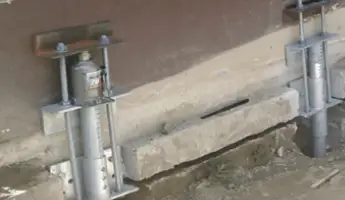
- Steel pipe sections driven straight down through the footing
- Installed using the weight of the structure as resistance
- Pushed until they hit load‑bearing strata (denser soil or rock)
- Then locked off to support and/or lift the foundation
Best use cases:
- Heavier structures with enough weight to properly mobilize the pier
- Situations where the goal is to bypass weak upper soils and bear deeper
- Sites where access allows hydraulic push equipment to be set up
Key point: push piers rely on the building’s weight to develop capacity.
2. What Helical Piers Are
Helical piers are:
- Steel shafts with helix “plates” (like giant screws) on the end
- Rotated into the ground using hydraulic torque motors
- Capacity is estimated/verified by installation torque
- They do not rely on the full building weight to mobilize
Best use cases:
- Lighter structures, additions, decks, porches, some retrofit situations
- Sites where soil conditions are known enough to design proper helices
- Areas where you need to support loads right away without much settlement
Key point: helical piers are torque‑driven anchors, not weight‑driven.
3. Push vs Helical: How to Choose in the Bay Area
There is no one‑size‑fits‑all. Practical filters:
3.1 Building weight and configuration
- Push‑pier leaning:
Heavier, multi‑story homes, or stiff structures with good footing access. - Helical‑pier leaning:
Lighter structures, additions, or partial underpinning where structure weight is limited.
3.2 Soil conditions
- Push piers:
Often favored where there’s a reasonably clear deeper bearing layer and enough structure weight to push to it. - Helicals:
Useful where you can design for known soil behavior and need uplift/lateral components (e.g., some hillside or retaining scenarios).
In either case, in tricky soils or hillsides you should expect engineering involvement, not purely prescriptive work.
3.3 Access and logistics
- Tight access, interior work, or limited room for push equipment may tilt the decision toward helical piers.
- More open sites with room for braces and jacks can use either, depending on design.
4. Where Piers Fit in the Bigger Picture
Underpinning is just one tool. It should be integrated with:
- Drainage control (to stop ongoing soil softening or erosion)
- Concrete repair / capping / replacement where foundations are damaged
- Seismic retrofit so you’re not just propping up a weak, unbraced structure
If you only add piers but ignore:
- Water and drainage
- Cracked, delaminated footing segments
- Rotten mudsills and poor framing connections
…you’ve only fixed one piece of a larger structural problem.
Relevant pages:
- Foundation Services: Repair, Replace & Reinforce in the Bay Area
- Drainage, Waterproofing & Basement Services in the Bay Area
- Seismic, Foundation & Drainage Services
5. Why You Can’t Choose Piers from a Sales Pitch or 10‑Minute Visit
You cannot correctly decide between push and helical piers from:
- A quick walk‑around
- A generic “we always use X” pitch
- A one‑page proposal with no soil or structural context
A responsible underpinning plan requires:
- Crawl‑space and foundation inspection
- Understanding of soil and water behavior at the site
- Structural context (loads, geometry, future plans)
- Often, input from an engineer on pier type, locations, and loads
This is why we separate real diagnostics from quick “free estimates”:
6. What To Do If Someone Says “You Need Piers”
If you’re in the Bay Area and a contractor or inspector has said you “need push piers” or “need helicals”:
- Ask what problem they’re actually solving.
- Settlement? Heave? Rot? Poor soils? Drainage?
- Ask why they chose that pier type.
- Weight‑driven vs torque‑driven?
- What soils are they assuming?
- What’s the design load per pier?
- Get a combined structural + foundation + drainage evaluation.
Start here:
Seismic, Foundation & Drainage Services - If piers are part of the answer, make sure they’re not the only answer.
Bundle them with the right drainage fixes, foundation repairs, and seismic upgrades so you’re not paying big money for a partial solution.
Push piers and helical piers are powerful tools when used in the right context. The win is not “which brand of pier,” but having a plan that actually stabilizes your house, manages water, and supports a proper seismic load path.