San Francisco Bay Area
August 13, 2026
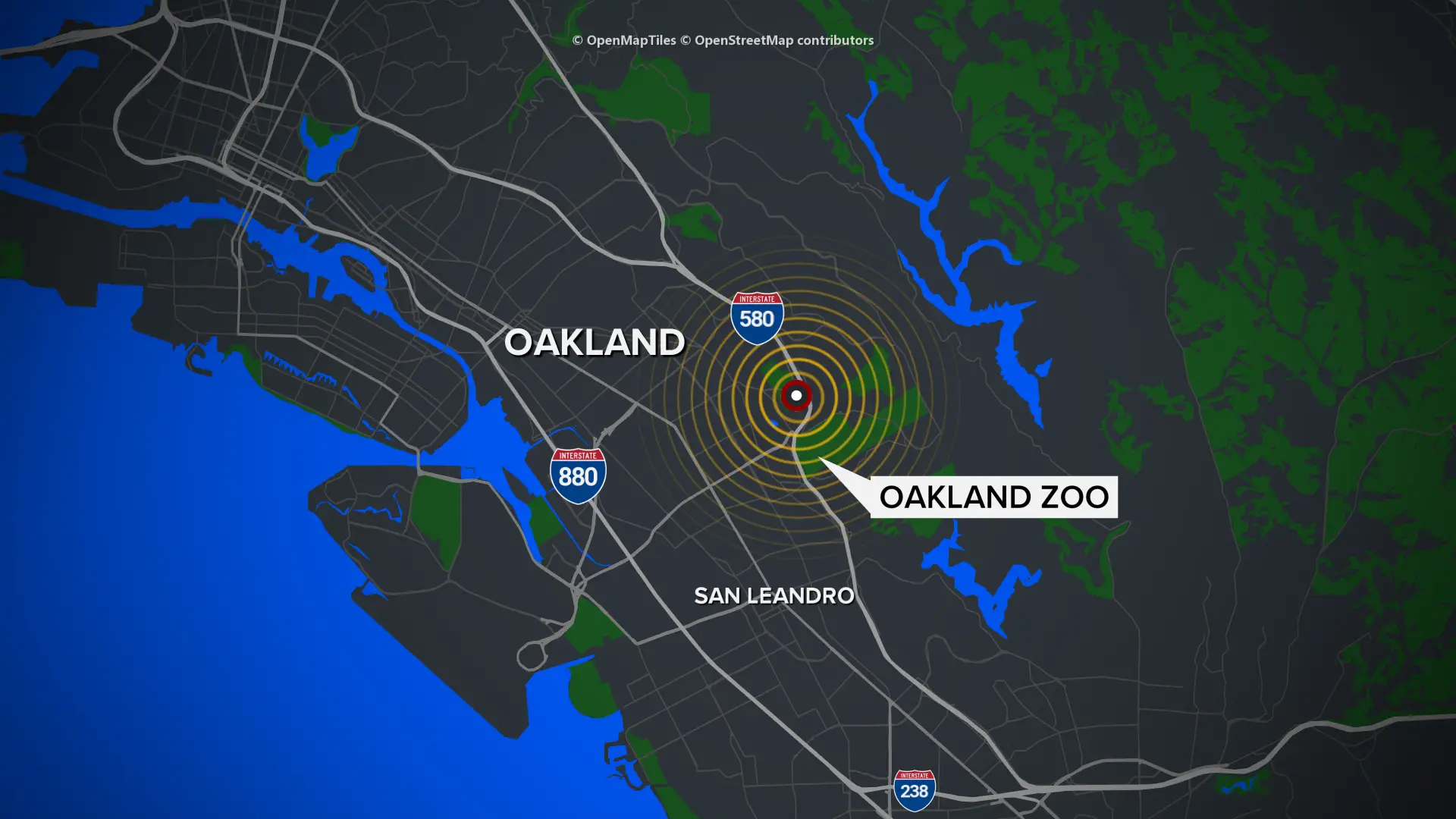
At 8:30 a.m. Thursday, a sharp jolt hit the East Bay near the Oakland–San Leandro border, rattling homes, offices, and BART riders across Alameda County.
The U.S. Geological Survey (USGS) now classifies the quake as a magnitude 3.8 event located near the Oakland–San Leandro line, at a depth of about 5.2 km (3.2 miles):
- Main shock event page:
https://earthquake.usgs.gov/earthquakes/eventpage/nc75417557/executive
How the Magnitude Changed: 4.0 → 4.1 → 3.8
If you saw different numbers this morning, you’re not imagining things.
- ABC7 initially reported the quake as a 4.1, then noted that USGS had revised it downward several times, finally listing it as M 3.8 near the Oakland–San Leandro border:
https://abc7news.com/post/san-leandro-earthquake-magnitude-41-quake-shakes-alameda-county-usgs-says/19673030/ - CBS Bay Area likewise described a preliminary 4.1 centered about 2.5 miles north of San Leandro at 8:30 a.m., before the final USGS solution settled at the lower magnitude:
https://www.cbsnews.com/sanfrancisco/news/east-bay-san-leandro-aug-13-earthquake/
This is normal. Automatic solutions come in fast so emergency systems can react. As more stations report and the math is refined, USGS updates the magnitude. For this event, the final, authoritative number is M 3.8.
Aftershocks: Two Smaller Quakes in the Same Area
USGS shows that the main shock (event nc75417557) was followed by at least two smaller aftershocks in the same general area:
- Aftershock 1:
https://earthquake.usgs.gov/earthquakes/eventpage/nc75417577/executive - Aftershock 2:
https://earthquake.usgs.gov/earthquakes/eventpage/nc75417582/executive
All three events:
- Occurred near the Oakland–San Leandro border
- Were shallow, making the shaking feel sharp and close‑by
- Were too small to cause widespread damage, but large enough to be widely felt
Classic mainshock–aftershock behavior: the crust slips once, then rattles a bit more as stresses redistribute.
What USGS and Local Media Are Seeing
Across USGS and major local outlets, the picture is consistent:
- Location: Near the Oakland–San Leandro border, about 2.5 miles north of San Leandro
- Depth: Roughly 5 km, which is relatively shallow
- Shaking: Felt widely across the East Bay; BART briefly stopped trains as a precaution before resuming service (reported by both ABC7 and CBS)
- Damage: As of this writing, no significant injuries or structural damage have been reported by Oakland, San Leandro, or county officials
ABC7 also notes that people typically begin to feel earthquakes above about magnitude 2.5, which matches the large number of “Did you feel it?” reports submitted to USGS.
Why a 3.8 on the Hayward System Still Matters
On paper, a 3.8 is “small.” For houses and small buildings sitting on and near the Hayward Fault system, it’s another live‑fire drill.
USGS and California forecasts have repeatedly flagged the Hayward–Rodgers Creek fault system as one of the highest‑risk faults in the state for a magnitude 6.7 or larger earthquake within the next 30 years. In practical terms:
- This fault will produce a major earthquake again.
- We are not in a region where big events are centuries apart.
- Every shallow quake under our existing housing stock is a chance to see where vulnerabilities actually are.
The area shaken today is full of:
- Older wood‑frame homes on raised foundations and crawl spaces
- Partial basements and layered additions from different eras
- Soft‑story / living‑over‑garage conditions
- Hillside lots with drainage and retaining wall issues
That combination means your foundation, crawl space, and drainage are just as critical as “having some bolts.” When the Hayward Fault really goes, those details will decide whether your house shrugs or suffers.
A Practical Post‑Quake Checklist for Homeowners
Instead of just checking the USGS map and moving on, use this San Leandro–Oakland sequence as a trigger to actually evaluate your house.
1. Walk the exterior
- Look for new cracks in stucco, siding, porch steps, and concrete.
- Check for gaps or separations at the base of walls, at porch/patio transitions, and around the garage.
- Inspect retaining walls and slopes for fresh cracks, tilting, or soil movement.
2. Look under the house
If you have a crawl space or partial basement and can safely access it:
- Check whether any posts or piers are leaning or shifted.
- Look for new cracks on the inside face of foundation walls.
- Look for wet soil, staining, or silt lines that might show where water prefers to go during storms.
- Note any sagging or wet framing, especially under decks, patios, or rear additions.
3. Pay attention to how the interior “feels”
- Any doors or windows suddenly sticking that were fine last week?
- Any new slopes or bounce in floors, especially near exterior walls or over garages?
- Any fresh cracks above doors, windows, or at ceiling/wall joints?
If you’re seeing more than cosmetic changes, that’s not a reason to panic. It’s a signal to stop guessing and get a real, under‑house evaluation.
Turning Today’s Quake into a Real Plan for Your Home
For Bay Area homeowners, here’s a straightforward, high‑leverage sequence:
- Document what you see
- Take photos of cracks, gaps, wet areas, and anything that looks “off.”
- Note whether you first noticed them before or after August 13.
- Schedule an actual seismic / foundation / drainage evaluation
Not a free 10‑minute “estimate.” A real evaluation should include:- Time spent in the crawl space or basement, not just at the hatch
- To‑scale drawings of your foundations and ground‑level structural elements
- A photo set that you keep for your records
- A plain‑English written summary explaining what’s there now and where the real vulnerabilities are
- Typed, itemized proposals for seismic, foundation, and drainage corrections
- Verify any prior “retrofit” work
We routinely find:- Bolts drilled into weak or deteriorated concrete
- Scrap plywood shear walls and missing or incorrectly installed hardware
- Work done under prescriptive programs or grants that does not actually follow the intent of FEMA P‑1100 or standard Plan Set A
- Coordinate seismic and drainage together
Cracks opened by today’s shaking can become water paths in the next big storm. If you’re going to trench for drainage or open exterior walls, that’s often the best and cheapest time to:- Upgrade hardware and connections
- Correct under‑floor vulnerabilities
- Address both earthquake and water risk in one coordinated plan
How Avant‑Garde Fits In
Avant‑Garde Construction Enterprise is based in San Leandro and our family has specialized in seismic retrofit, foundation repair, and drainage protection for Bay Area homes since 1992. You can learn more about our focus and approach on our main site:
https://www.avant-gardece.com/
Here’s how we typically help after events like this:
- Seismic Truth Audits™
We inspect what’s actually under your house – not just what’s on a permit card – and document existing bolts, shear walls, posts, piers, and drainage conditions so you know what you really have. - Paid, professional evaluations (not sales calls)
For seismic, foundation, and drainage, including:- Full crawl space / basement review
- To‑scale ground‑level drawings
- Photo documentation you keep
- A clear written summary in plain English
- Typed, itemized proposals for priority fixes and “do‑it‑once” upgrades
- Design‑build seismic and drainage solutions
We follow the full load path and coordinate drainage, foundations, and seismic retrofit together, so you’re not bolting into concrete that’s slowly being undermined by water.
For more case studies and past earthquake coverage, you can also browse our Recent News section:
https://www.avant-gardece.com/category/recent-news/
If you felt this morning’s 3.8 and realized you don’t actually know how your home would behave in a larger Hayward Fault event, you’re not alone. The difference is whether you leave it as background noise… or turn today’s wake‑up call into a concrete plan.
If you’d like help with that, you can contact Avant‑Garde Construction Enterprise at [email protected].